
The Expert Guide to AP and Payment Automation (2026)

Imagine your finance team running at peak efficiency, invoices processed instantly, payments sent on time, and compliance handled automatically. This is the reality of ap and payment automation in 2026. Businesses are shifting away from tedious manual tasks and embracing smart, automated solutions.
In this guide, you will learn what ap and payment automation really means today, why it is critical for staying competitive, and how to start your own transformation. Discover how automation drives cost savings, reduces fraud, and lets your team focus on strategic work. Let’s explore the future of accounts payable together.
Understanding AP and Payment Automation: Definitions, Benefits, and Key Drivers
Accounts Payable, or AP, is the process by which companies track and pay money they owe to suppliers, contractors, and partners. In 2026, ap and payment automation means using software to streamline every step of this process—capturing invoices, routing approvals, and making payments with minimal manual input.
With ap and payment automation, the days of paper invoices and spreadsheets are fading. Instead, organizations rely on digital tools that extract invoice data, match it to purchase orders, and handle payments in a few clicks. This shift is about more than technology—it’s a response to the growing complexity and speed of modern business.
Manual AP processes still dominate in many organizations. These legacy methods often lead to data entry errors, missed payment deadlines, duplicate payments, and increased compliance risks. Finance teams spend hours chasing approvals or reconciling records, which drags down productivity and morale.
The pain is real. According to industry research, companies with automated AP processes process invoices 74% faster and save 60% in processing costs compared to manual workflows. Despite these gains, 68% of companies still enter invoice data by hand, exposing themselves to inefficiencies and avoidable mistakes.
Why are so many businesses moving toward ap and payment automation? The benefits are clear. Automation brings speed and accuracy to invoice processing. It reduces costly errors and duplicate payments, prevents fraud by enforcing controls, and supports better supplier relationships through timely payments.
- Speed: Invoices get approved and paid in days, not weeks.
- Cost savings: Less manual work means lower labor costs and fewer late fees.
- Fraud prevention: Automated checks and audit trails catch suspicious activity before it becomes a problem.
- Supplier relationships: Prompt payments build trust and can unlock early payment discounts.
For a deeper look at how organizations can transform their AP workflows, see this overview on Improving Accounts Payable Process.
Several major trends are driving adoption of ap and payment automation in 2026. The shift to remote work has made digital processes essential. Invoice volumes continue to rise as organizations grow and expand globally. Regulatory requirements, such as e-invoicing mandates and stricter data privacy laws, are pushing companies to modernize. There’s also increasing demand for real-time data and analytics to support smarter financial decisions.
Let’s compare traditional and automated AP:
| Aspect | Manual AP | Automation |
|---|---|---|
| Data Entry | Hand-keyed | OCR, e-invoicing |
| Approval Routing | Email, paper, in-person | Automated workflows |
| Payment Execution | Checks, manual transfers | Integrated bank payments |
| Error Rate | High | Low |
| Compliance | Reactive | Proactive, built-in controls |
A mid-sized distributor once took 25 days to process an invoice manually. After adopting ap and payment automation, that cycle dropped to just 4 days. This freed up staff time for more strategic work, like analyzing spend or improving vendor negotiations.
Some worry automation will eliminate finance jobs. In reality, it shifts repetitive tasks to software, letting teams focus on analysis, strategy, and supplier management. Automation enhances roles rather than replacing them.
Adoption rates and challenges vary by industry. Retailers and manufacturers, dealing with high invoice volumes, have moved quickly. Professional services and smaller firms may face hurdles like legacy systems or resistance to change. Yet across sectors, the trend is clear: ap and payment automation is no longer optional—it’s a competitive necessity.

Core Components of Modern AP Automation Solutions
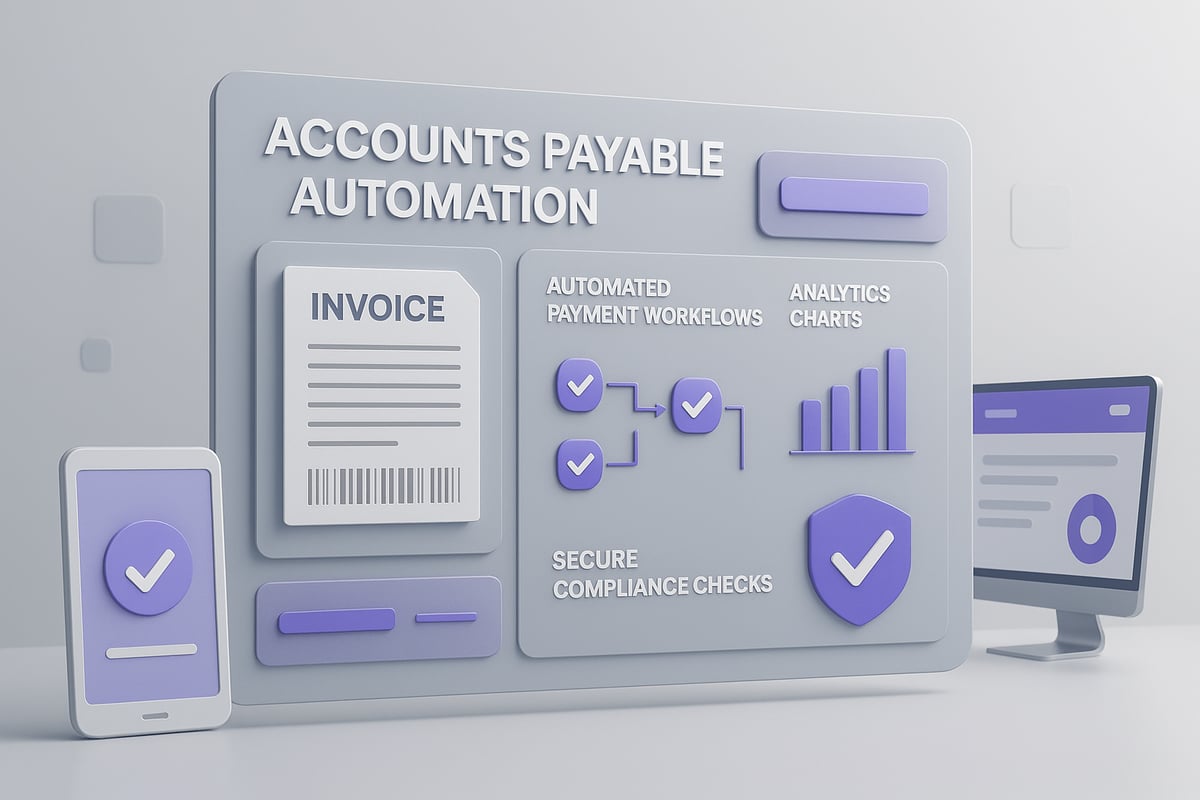
Modern AP and payment automation solutions are built from a suite of interconnected components, each designed to replace manual tasks with streamlined, digital processes. Understanding how these features work together is key to unlocking the full value of automation in accounts payable.
Invoice Capture and Digital Workflows
The journey begins with invoice capture. Instead of shuffling through paper stacks or forwarding emails, modern systems use Optical Character Recognition (OCR) to scan and extract data from invoices in seconds. E-invoicing takes this further, allowing suppliers to submit invoices directly into your platform. Digital workflows then route these invoices for review and approval, eliminating lost paperwork and bottlenecks.
For a deeper dive into how digital invoice processing transforms AP, see this Accounts Payable Invoice Processing Guide.
Automated Approval Workflows
Once invoices are captured, automated approval workflows kick in. These systems route documents to the correct approvers based on customizable rules. Exception handling flags duplicate invoices or out-of-policy expenses for review, preventing errors before they cause problems. Custom permissions ensure sensitive information is only accessible to authorized staff.
This structure not only speeds up processing but also creates a reliable audit trail. AP and payment automation ensures every action is logged and traceable, which is essential for compliance and transparency.
Payment Execution and Multi-Rail Support
When it is time to pay, integration with your banking partners is seamless. AP and payment automation supports a range of payment rails, from ACH and SEPA to instant payments. The system can schedule or trigger payments automatically once invoices are approved, reducing manual intervention and the risk of late fees.
Some platforms even allow for customized payment timing, optimizing cash flow by taking advantage of early payment discounts or deferring payments as needed.
Real-Time Analytics and Reporting
Visibility is a hallmark of modern AP and payment automation. Dashboards provide real-time insights into spend patterns, outstanding liabilities, and processing times. Advanced analytics help you spot trends, identify savings opportunities, and benchmark performance. Audit trails make compliance checks and investigations straightforward.
Compliance, Security, and Data Privacy
With regulatory requirements like GDPR and SOX, security is non-negotiable. Leading solutions encrypt sensitive data, enforce multi-factor authentication, and maintain detailed logs for every transaction. Automated compliance checks reduce the risk of fines and make audits far less stressful.
Vendor Management
Efficient vendor management is another pillar. AP and payment automation platforms often include self-service portals for onboarding, document submission, and payment status updates. This reduces back-and-forth communication and keeps suppliers happy.
Integration Capabilities
Modern businesses rarely operate in silos. APIs and ERP connectors ensure AP and payment automation tools integrate smoothly with your existing accounting, procurement, and banking systems. Compatibility with third-party apps means you can extend functionality without major IT overhauls.
Mobile and Remote Access
Finance teams are no longer tethered to a single location. Mobile-friendly interfaces and cloud-based access enable distributed teams to approve invoices, monitor payments, and resolve exceptions from anywhere. This flexibility is crucial for global operations and remote workforces.
Summary Table: Core Components
| Component | Key Functionality |
|---|---|
| Invoice Capture | OCR, e-invoicing, digital workflows |
| Approval Workflows | Automated routing, exception handling, permissions |
| Payment Execution | Bank integration, ACH, SEPA, instant payments |
| Analytics & Reporting | Dashboards, spend analysis, audit trails |
| Compliance & Security | GDPR, SOX, encryption, audit logs |
| Vendor Management | Onboarding, self-service, communication |
| Integration | APIs, ERP connectors, third-party apps |
| Mobile Access | Remote approvals, monitoring, exception handling |
The right combination of these features in an AP and payment automation solution can transform accounts payable from a cost center to a strategic driver of business value.
Steps to Implement AP and Payment Automation in 2026: A Practical Roadmap
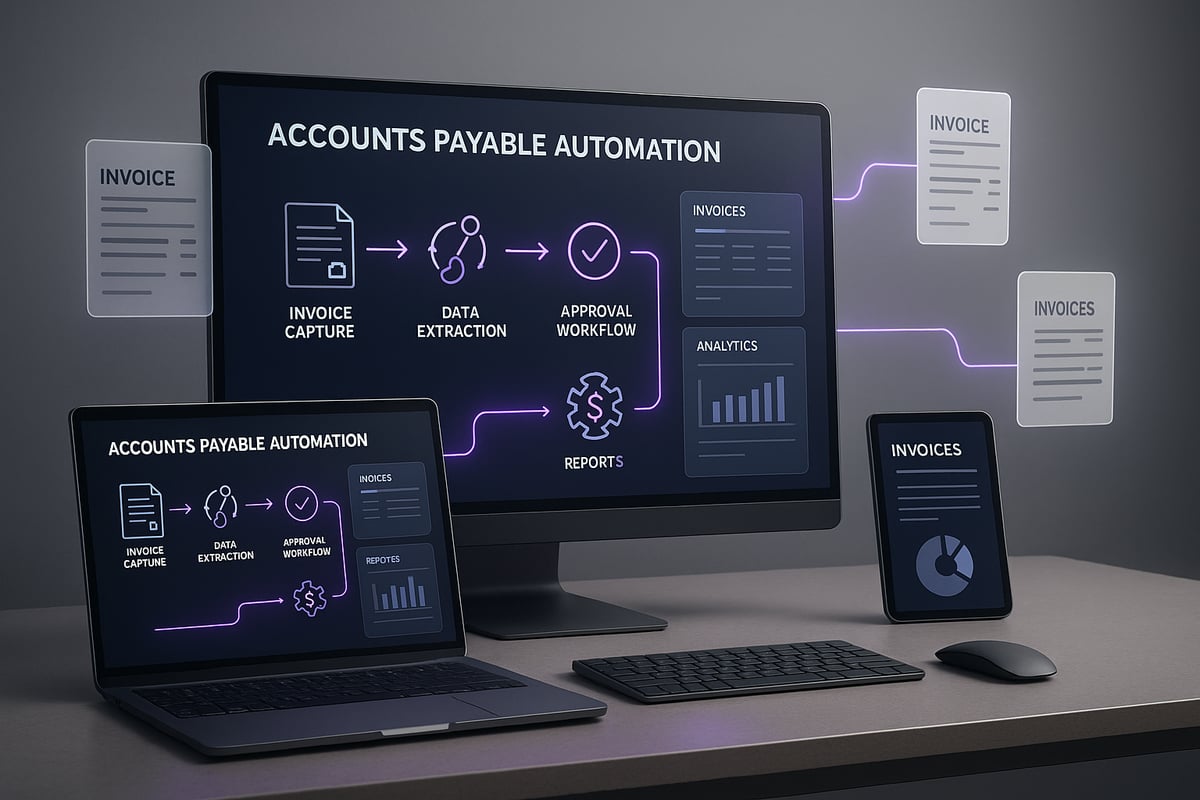
Transforming your finance operations with ap and payment automation starts with a clear, actionable roadmap. Whether you are modernizing a legacy process or scaling a fast-growing team, following a structured approach ensures you unlock the full value of automation while minimizing risks.
Assessing Your Current AP Landscape
Begin by mapping your existing accounts payable workflows. Document how invoices arrive, how approvals are handled, and where manual intervention is needed. Identify bottlenecks such as delayed approvals, high error rates, or frequent duplicate payments.
Engage stakeholders across finance, procurement, and IT to surface pain points that ap and payment automation could address. Use this discovery phase to establish baseline metrics like invoice cycle time, processing costs, and exception rates. These benchmarks will help you measure progress later.
Building a Business Case
With pain points identified, calculate the potential gains from ap and payment automation. Analyze time spent on manual data entry, the cost per invoice, and the impact of late payments or missed discounts. Estimate the savings from automation, including reduced labor, fewer errors, and improved cash flow.
Present a clear ROI model, supported by both hard data and qualitative benefits like improved supplier relationships. Secure buy-in from finance leadership, IT, and business owners. Early alignment ensures support throughout the project.
Choosing an AP and Payment Automation Solution
Evaluate platforms based on your business requirements and growth plans. Look for solutions with robust invoice capture, automated approval routing, secure payment execution, and seamless integration with your ERP or accounting system. Scalability and vendor reliability are crucial—your chosen system should adapt as transaction volumes increase.
Explore Payment Automation Insights to better understand the latest features and technologies shaping the industry. Ensure the solution supports compliance standards relevant to your region. Prioritize flexibility to customize workflows and reporting.
Data Migration and Integration
Successful ap and payment automation hinges on smooth data migration. Audit your existing vendor data, invoice history, and approval hierarchies for accuracy and completeness. Clean, standardized data reduces errors and integration headaches.
Collaborate with IT and your solution provider to plan integrations with ERP systems, banking partners, and any third-party apps. Use APIs and pre-built connectors where possible to streamline the process. Test data flows in a sandbox environment before full deployment.
Customizing Workflows and Driving Adoption
Tailor automated workflows to match your organization’s policies and approval hierarchies. Set up automated routing, exception handling, and permissions that reflect real-world scenarios. Involve finance users early in the design phase to ensure the system fits daily needs.
Change management is key. Provide hands-on training and clear documentation. Address concerns about job security by showing how ap and payment automation frees staff for higher-value analysis and relationship-building. Encourage feedback and iterate on processes as needed.
Testing, Piloting, and Measuring Success
Before a full rollout, run a pilot with a small group or a single business unit. Monitor key metrics: invoice cycle time, payment accuracy, and user satisfaction. Use lessons learned to refine workflows and training materials.
Set clear KPIs to measure the impact of ap and payment automation after launch. Examples include reduction in processing costs, lower error rates, and improved supplier satisfaction. Celebrate wins and share results with stakeholders to maintain momentum and drive continuous improvement.
The Future of AP and Payment Automation: Trends and Innovations for 2026
Imagine stepping into an office where your ap and payment automation platform is not just digitized, but also intelligent, self-optimizing, and seamlessly connected to every part of your business. In 2026, the landscape is evolving rapidly, with cutting-edge technology and new priorities shaping how companies handle accounts payable. The following trends reveal what’s coming next and how finance teams can prepare.

AI-Powered Decision-Making
Artificial intelligence is no longer just a buzzword in ap and payment automation. In 2026, AI is moving beyond simple data extraction to deliver predictive analytics that forecast cash flow, flag potential fraud, and recommend optimal payment timing. Finance teams use these insights to make strategic choices, not just process transactions.
Emerging platforms now integrate AI agents that learn from historical data and user behavior. This means the system can surface anomalies, automate reconciliations, and even suggest corrective actions before issues escalate. For a technical deep dive, the FinRobot: Generative Business Process AI Agents for ERP in Finance research provides a glimpse into how AI agents are transforming finance operations.
Autonomous Finance and Self-Learning Systems
The next step in ap and payment automation is autonomy. Self-learning platforms optimize payment schedules to maximize early payment discounts or improve working capital. These systems adapt in real time, learning from invoice cycles and supplier behavior to drive continuous efficiency.
Companies that embrace autonomous finance see a reduction in manual intervention and a shift in the finance team’s role—from data entry to strategic oversight. With machine learning, workflows refine themselves, providing a smoother experience for both internal teams and external vendors.
Blockchain and Smart Contracts
Blockchain technology is making inroads into ap and payment automation by enabling smart contracts, which automatically trigger payments when contractual conditions are met. This reduces disputes, increases transparency, and virtually eliminates manual reconciliations.
The impact is especially strong in industries that handle high volumes of cross-border transactions. Blockchain ledgers provide immutable audit trails, simplifying compliance and fraud prevention. As adoption grows, expect to see more platforms offering plug-and-play blockchain modules for enhanced security and efficiency.
Real-Time Global Payments
The expansion of real-time payment networks is transforming global supply chains. In 2026, ap and payment automation platforms connect directly with instant payment rails, allowing businesses to settle invoices across borders within minutes instead of days.
This shift means improved cash flow, stronger supplier relationships, and reduced risk of late payment penalties. Companies leveraging these tools can respond quickly to market changes and supplier needs, gaining a competitive advantage in fast-moving industries.
Embedded Finance and Connected Workflows
Embedded finance is redefining the user experience in ap and payment automation. Rather than jumping between disconnected systems, finance teams can now initiate, approve, and monitor payments directly within their ERP or procurement platforms.
APIs play a crucial role here, enabling seamless data flow and workflow integration. Embedded solutions reduce errors and duplication, while giving leaders a holistic view of spend and compliance in one place.
ESG and Sustainable Payment Practices
Environmental, social, and governance (ESG) factors are now front and center in ap and payment automation strategies. Automated platforms make it easier to track carbon footprints, ensure supplier diversity, and document sustainable procurement practices.
This transparency is increasingly demanded by regulators and stakeholders. Platforms that offer ESG reporting tools help companies demonstrate their commitment to responsible business practices while streamlining audits and compliance.
Regulatory Outlook and Industry Growth
Looking ahead, regulations around e-invoicing, tax compliance, and data privacy are tightening. Ap and payment automation platforms are evolving to keep pace, offering built-in compliance checks and automatic updates for new rules.
The market reflects this momentum. According to industry analysts, the AP automation market is projected to reach USD 11.17 billion by 2030, signaling widespread adoption and investment. Businesses that modernize their AP processes now will be best positioned to adapt to regulatory changes and emerging technologies.
Table: Key Innovations in AP and Payment Automation for 2026
| Trend | Impact on AP & Payment Automation |
|---|---|
| AI-Powered Analytics | Smarter cash flow, anomaly detection |
| Autonomous Finance | Optimized payment timing, less manual work |
| Blockchain & Smart Contracts | Automated execution, enhanced security |
| Real-Time Payments | Faster settlements, global reach |
| Embedded Finance | Unified workflows, improved visibility |
| ESG Reporting | Sustainable, compliant operations |
| Regulatory Adaptation | Future-proof compliance |
A tech startup recently used AI-driven ap and payment automation to scale from 10 to 1,000 invoices per month without adding headcount. This real-world example shows how innovation can unlock growth, efficiency, and resilience for companies ready to embrace the future.
Building a Business Case for AP and Payment Automation
Building a business case for ap and payment automation starts with a clear understanding of its value. Decision-makers want proof that automation delivers measurable results, not just buzzwords. The foundation of any strong case lies in quantifying both the hard and soft benefits your organization will gain.
Consider the direct, tangible benefits first. Automation reduces manual data entry, lowers error rates, and accelerates invoice processing. For example, before automation, a typical AP team may process only 10–15 invoices per day per person, often leading to backlogs and late fees. After implementing ap and payment automation, teams can handle hundreds of invoices daily, with fewer mistakes and on-time payments as the new standard.
| Metric | Before Automation | After Automation |
|---|---|---|
| Avg. Cost Per Invoice | $15 | $6 |
| Invoice Processing Time | 8 days | 2 days |
| Error Rate | 4% | 0.5% |
| On-Time Payment Rate | 62% | 96% |
These numbers tell a compelling story. Automation does not just save money, it speeds up operations and enhances accuracy. According to recent research, 73% of firms say AP automation improves cash flow, supporting the argument that faster invoice cycles and fewer errors directly impact the bottom line.
Beyond numbers, intangible benefits play a vital role. Ap and payment automation strengthens supplier relationships by ensuring timely, predictable payments. This reliability leads to preferred pricing, priority service, and improved negotiating power. Enhanced data visibility is another major win. Finance leaders gain real-time insights into liabilities, cash flow, and spend trends, enabling smarter forecasting and strategic planning.
Compliance and audit readiness also improve. Automated systems track every approval, payment, and exception, creating a transparent audit trail. This helps organizations avoid penalties and maintain trust with regulators and stakeholders.
When calculating ROI for ap and payment automation, start with a simple formula:
ROI = (Annual Savings from Automation - Annual Cost of Solution) / Annual Cost of Solution x 100%
Annual savings include reduced headcount costs, fewer late payment fees, and lower error correction expenses. For instance, if automation cuts invoice processing costs from $15 to $6 per invoice and your company handles 10,000 invoices a year, the savings add up quickly.
Addressing objections is essential for securing buy-in. Common concerns include:
- Upfront Costs: While initial investment can be significant, most organizations see payback within 12–18 months.
- Operational Disruption: Modern solutions integrate with existing ERPs, minimizing downtime.
- Security Risks: Leading platforms use encryption, role-based access, and audit logs to safeguard data.
- Job Losses: Automation shifts focus to higher-value tasks rather than eliminating roles.
Gaining executive sponsorship is easier when you align ap and payment automation with broader business goals. Show how automation supports growth, agility, and risk mitigation. Share stories from peers or competitors who have successfully transformed AP from a cost center into a strategic asset.
A phased rollout is often the best approach. Begin with a pilot program in one business unit, gather feedback, and refine workflows. Use early wins to build momentum and expand automation organization-wide. Track key metrics—cycle times, error rates, supplier satisfaction—to demonstrate ongoing value.
Continuous improvement is the final piece. As your team adapts, revisit processes, update configurations, and leverage new features. One CFO described their journey: “We went from chasing paper to analyzing spend patterns and advising the business. Ap and payment automation freed our team to deliver real insight, not just transactions.”
A well-crafted business case blends data, real-world examples, and strategic vision. When you present the full picture—financial, operational, and competitive advantages—stakeholders are far more likely to support the shift to ap and payment automation.
As you’ve seen throughout this guide, automating your AP and payment processes isn’t just about saving time—it’s about empowering your team, reducing risks, and future proofing your business in a fast changing financial landscape. If you’re ready to explore how seamless, secure, and real time payment automation can work for your organization, let’s take the next step together. Whether you’re managing cross border payouts or looking to integrate with your existing systems, we’re here to help you make it happen.
Contact sales
and discover how Payoro can accelerate your journey toward smarter AP automation.
Share article on


Related articles
See all articles iGaming Payout Solutions: How Operators Can Process Player Withdrawals Faster
iGaming operators lose players to slow withdrawals. Learn how modern payout solutions, from SEPA Instant to stablecoin settlement,...

KYC AML Compliance for Payouts: What Every Platform Needs to Know
Learn how KYC and AML compliance requirements apply to payout platforms in the EU. Practical framework for tiered...
Vendor Payouts: How Platforms Can Pay Suppliers Faster and Cheaper
Vendor payouts are slow and expensive for most platforms. Learn how to automate vendor payments, cut cross-border costs,...
Payment Orchestration Explained: Why Platforms Are Ditching Single-Provider Setups
Running payments through a single provider is a single point of failure. Payment orchestration gives platforms the routing,...