
Improving Accounts Payable Process Guide: Expert Insights 2026

Is your accounts payable process draining resources and causing late payments? You’re not alone. Many finance teams in 2026 are battling manual errors, slow approvals, and heightened compliance risks.
But what if improving accounts payable process could turn these headaches into opportunities? With the right strategies, AP can shift from being a cost center to a true strategic asset for your business.
In this guide, you’ll find actionable steps, industry insights, and innovative solutions tailored for today’s challenges. Discover proven methods and expert perspectives to help finance leaders optimize AP for efficiency, accuracy, and resilience in 2026.
Understanding the Modern Accounts Payable Landscape
Modern accounts payable (AP) teams are no longer just processing invoices and cutting checks. Their role has evolved into a strategic function that directly supports business agility and growth. With digital transformation accelerating, AP departments now manage more than transactions—they influence supplier relationships, cash flow, and even organizational reputation.
Finance leaders expect AP to deliver real-time insights, not just accurate payments. For example, many organizations now use AP data for spend analysis and forecasting, identifying trends that shape smarter procurement and budgeting. This shift means that improving accounts payable process capabilities has become essential for proactive financial management.

The Evolving Role of Accounts Payable
AP has transformed from a back-office cost center into a strategic hub within finance. The drive toward digital transformation means AP teams are expected to analyze spend, forecast cash flow, and support decision-making with real-time data. This evolution enables AP to build stronger supplier relationships by ensuring timely, accurate payments and transparent communication.
Companies are leveraging AP data to identify savings and improve negotiation power. For instance, a global retailer used AP analytics to uncover costly supplier trends, resulting in a 12% reduction in spend. Improving accounts payable process workflows now directly contributes to business resilience and competitiveness.
Key Challenges in 2026
Despite the progress, AP teams face mounting challenges in 2026. Globalization has led to higher invoice volumes and increased complexity, especially with multi-currency and cross-border transactions. Regulatory changes like e-invoicing mandates and evolving tax laws add layers of compliance.
Cybersecurity threats have become more frequent, targeting payment processes and exposing businesses to fraud. Remote work and decentralized teams can cause approval delays and communication breakdowns. According to a recent survey, 63% of finance leaders report a rise in AP fraud attempts, highlighting the urgency of improving accounts payable process controls.
The Cost of Inefficient Processes
Inefficient AP processes can drain resources in surprising ways. Direct costs include duplicate payments, late fees, and missed early payment discounts. Indirectly, staff burnout and strained supplier relationships add to the burden. Consider this comparison:
| Process Type | Avg. Cost per Invoice | Cycle Time |
|---|---|---|
| Manual | $12 | 10 days |
| Automated | $2 | 2-3 days |
A mid-sized EU business recently improved their AP workflow, cutting costs by 60% and reducing processing time by half. For many, improving accounts payable process efficiency is not just a cost-saving move—it is key to supplier trust and operational stability.
Opportunities for Transformation
The future of AP is shaped by automation, AI, and cloud-based technology. These tools enable faster invoice processing, improved compliance, and better data accuracy. AP is also playing a growing role in ESG (Environmental, Social, Governance) reporting, tracking supplier sustainability, and supporting green initiatives.
Strategic supplier partnerships and dynamic discounting are unlocking new value streams. Real-world examples show businesses leveraging AP for working capital optimization, turning a traditional cost center into a source of financial strength. For organizations seeking to modernize, cloud accounts payable solutions offer scalability and flexibility, making improving accounts payable process outcomes more achievable than ever.
Step-by-Step Guide to Improving the Accounts Payable Process
Transforming your AP function takes more than just new software or a quick fix. Improving accounts payable process performance starts with a clear-eyed look at your current workflow, then layering on digital tools, automation, and smart controls. Let’s break down the journey, step by step.
Step 1: Assess and Map Your Current AP Workflow
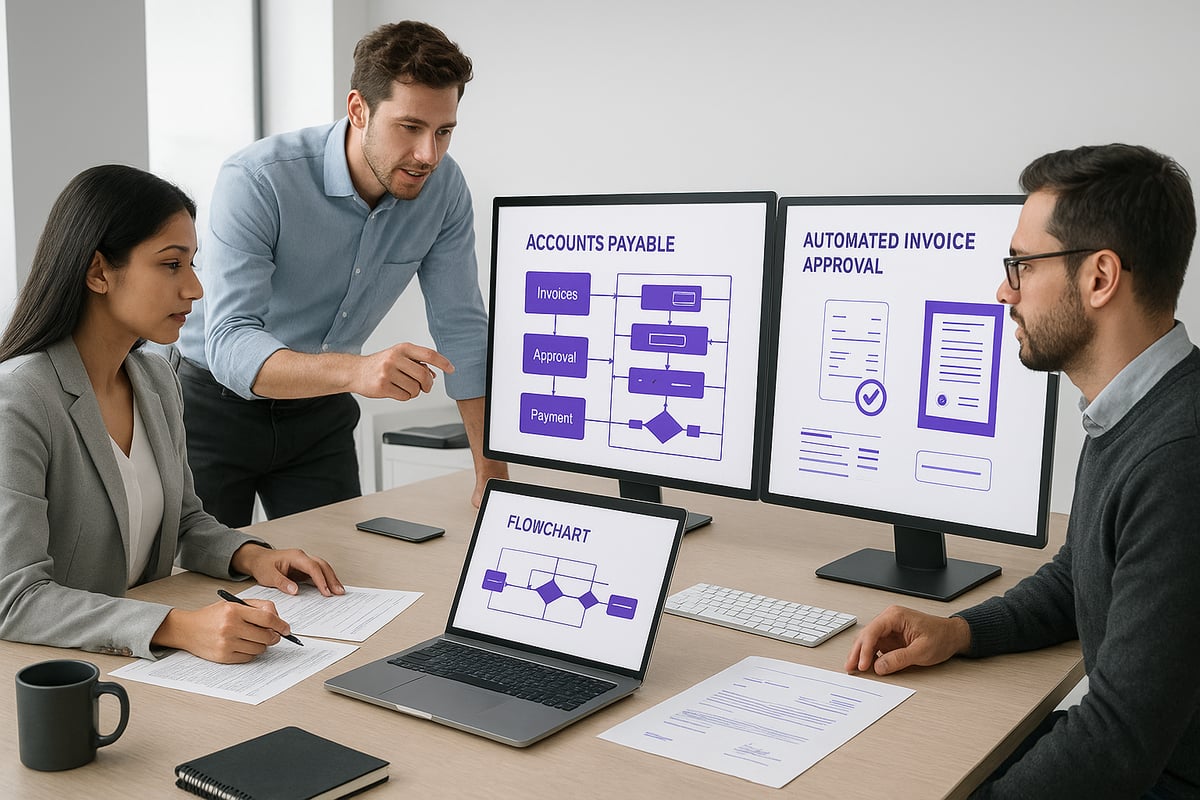
Start by documenting every step in your AP process, from the moment an invoice arrives until payment is issued. Use flowcharting tools to visualize who handles each task, where invoices get stuck, and how approvals move through the organization. This mapping uncovers manual bottlenecks and redundancies that slow down operations.
Gather feedback from AP staff and key stakeholders. Often, frontline employees spot inefficiencies that leadership might miss. According to an industry survey, 45 percent of AP teams lack full visibility into their workflow. If you are serious about improving accounts payable process efficiency, building this transparency is non-negotiable.
Step 2: Standardize and Digitize Invoice Capture
Next, implement e-invoicing solutions and optical character recognition (OCR) technology. These tools extract data directly from digital invoices, minimizing manual entry and reducing paper-based errors. Standardized invoice submission guidelines for vendors further streamline processing and cut down on confusion.
Transitioning suppliers to electronic portals enhances consistency and speeds up approvals. Digitized invoice capture can reduce errors by up to 70 percent. For a deeper dive into how automation can support this effort, explore these billing automation strategies. Improving accounts payable process reliability at this stage sets the foundation for later automation.
Step 3: Automate Approval and Exception Handling
Introducing workflow automation for multi-level approvals is a game-changer. Set up rules-based routing so invoices move automatically to the right people based on value or type. Automated alerts flag discrepancies for review, while exception handling tools quickly resolve issues.
Many organizations install three-way matching systems, connecting invoices, purchase orders, and delivery receipts. Peer-reviewed studies show automated approvals can cut invoice cycle times from 10 days to just 2. Improving accounts payable process speed directly impacts overall cash flow and supplier satisfaction.
Step 4: Integrate AP with ERP and Payment Systems
Seamless integration between AP, ERP, and banking platforms eliminates manual data entry and reduces reconciliation errors. API-driven connections allow real-time data sharing across systems, keeping financial records up to date and accurate.
Integrated systems also enable better payment accuracy and faster issue resolution. For example, connecting AP with treasury management helps optimize working capital. Research indicates integrated solutions improve payment accuracy by 40 percent, making improving accounts payable process outcomes more predictable.
| Integration Benefit | Impact on AP |
|---|---|
| Real-time data sync | Fewer errors |
| Automated reconciliation | Faster closing |
| API-driven updates | Better visibility |
Step 5: Strengthen Controls and Compliance
Implement robust controls such as segregation of duties and detailed audit trails. Digital approval logs and secure access controls protect against fraud and ensure accountability. Stay proactive about adapting to changing local and international regulations, including VAT and tax reporting requirements.
Automated compliance checks reduce manual workload and minimize the risk of penalties. In 2026, 52 percent of AP teams cite compliance as their top challenge. Improving accounts payable process controls in this area reduces both financial and reputational risks.
Step 6: Optimize Payment Timing and Methods
Review your payment strategies to maximize early payment discounts and minimize late fees. Dynamic discounting tools help prioritize which invoices to pay first, based on available cash and supplier terms. Evaluate payment options such as ACH, SEPA, real-time payments, and virtual cards for flexibility.
Payment analytics can guide smarter disbursement decisions, supporting both cash flow and supplier relationships. Companies optimizing payment timing save an average of 1.8 percent per invoice. Improving accounts payable process timing here can directly boost profitability.
| Payment Method | Key Advantage |
|---|---|
| ACH | Low cost, US focus |
| SEPA | Fast, EU coverage |
| Real-time payment | Instant settlements |
| Virtual card | Enhanced security |
Step 7: Monitor, Analyze, and Continuously Improve
Establish clear KPIs such as invoice cycle time, cost per invoice, and exception rate. Use dashboards for real-time tracking and schedule regular process reviews to identify incremental improvements. Quarterly audits and supplier feedback sessions keep the process aligned with business needs.
Top-performing AP teams review KPIs monthly and use the data to drive continuous improvement. Improving accounts payable process outcomes requires not just implementation but ongoing refinement and adaptation.
Common Pitfalls to Avoid
Do not overlook executive buy-in when launching AP initiatives. Without leadership support, even the best technology may fail to deliver ROI. Over-customizing automation tools can introduce unnecessary complexity, while neglecting change management leaves staff unprepared for new workflows.
Remember to prioritize supplier onboarding and open communication. A case in point: one business’s AP automation project stalled due to poor user adoption and lack of training. Improving accounts payable process success hinges on a holistic approach that combines technology, people, and process alignment.
Leveraging Technology for AP Transformation
Modern finance leaders are reimagining accounts payable with technology as their ally. The right solutions can reduce manual work, cut costs, and transform AP from a cost center to a value driver. With the landscape evolving rapidly, knowing what to look for in automation and how to future-proof your systems is essential for improving accounts payable process results.

Automation Tools: What to Look For
Selecting automation tools is a cornerstone for improving accounts payable process efficiency. Key features to prioritize include robust workflow automation, AI-powered invoice matching, and mobile approval capabilities for on-the-go managers. Scalability and seamless integration with your existing ERP are critical to avoid future bottlenecks as invoice volumes grow.
Vendor support and clear implementation timelines can make or break a project. Consider comparing platforms using a table, weighing factors like user interface, support, and analytics:
| Feature | Platform A | Platform B |
|---|---|---|
| AI Matching | Yes | Yes |
| Mobile Approvals | Yes | No |
| Integration | API, ERP | ERP only |
According to the Accounts Payable Automation Trends 2025 Report, 89% of AP leaders plan to boost automation investment by 2026, further highlighting its role in improving accounts payable process performance.
Cloud-Based vs. On-Premise Solutions
Deciding between cloud-based and on-premise AP systems shapes the flexibility of your operations. Cloud-based solutions offer unmatched accessibility, letting teams work securely from anywhere, a vital advantage for remote or hybrid teams. These platforms often reduce upfront costs and speed up deployment, supporting a scalable approach to improving accounts payable process outcomes.
On-premise systems, while seen as robust for data control, can create barriers for integration and remote access. A mid-market firm that migrated to a cloud AP environment reported faster approvals and smoother updates. Notably, cloud AP adoption jumped 35% year-over-year, mirroring the shift toward digital-first finance departments.
Real-Time Payments and API Integrations
Real-time payments are reshaping expectations for supplier satisfaction and cash flow management. By connecting AP systems directly with banking platforms via APIs, businesses can streamline the improving accounts payable process end-to-end. This integration reduces manual intervention, accelerates payment cycles, and minimizes errors.
For example, deploying real-time SEPA payments for EU suppliers has cut settlement times from days to minutes. In 2026, 60% of AP teams cite API integration as critical for future-proofing their operations, ensuring agility as payment technologies evolve.
Artificial Intelligence and Analytics
Artificial intelligence is now central to improving accounts payable process reliability and insight. AI-powered tools detect fraud, flag exceptions, and automate duplicate payment prevention, freeing up staff for higher-value work. Predictive analytics further empower teams to forecast cash flow and optimize spend.
One AP department leveraged AI for invoice processing, slashing manual review time and increasing early payment discount capture. Industry surveys reveal that 40% of AP teams already use AI, and this number is set to rise, making advanced analytics a competitive differentiator.
Future Trends: Blockchain, Crypto, and Beyond
Looking ahead, emerging technologies like blockchain and cryptocurrency are poised to redefine the improving accounts payable process. Blockchain enables tamper-proof invoice authentication and transparent audit trails, reducing disputes and compliance headaches. Early B2B adopters have piloted cross-border AP settlements using blockchain, reporting faster reconciliations and lower transaction costs.
Regulatory frameworks for digital assets remain in flux, so AP leaders should monitor developments while experimenting with pilot projects. By 2030, these innovations may become mainstream, turning AP into a true driver of digital transformation for finance.
Building a High-Performance AP Team
A high-performance AP team is the backbone of any strategy for improving accounts payable process effectiveness. Success in 2026 depends on more than just technology. It requires people with the right skills, a collaborative culture, strong supplier partnerships, and a commitment to ongoing improvement.

Skills and Roles for the Future
The landscape for improving accounts payable process demands new expertise. Digital literacy is now essential, with AP analysts and automation specialists becoming common. Teams need to interpret data, manage AI-driven workflows, and adapt to regulatory changes. Upskilling existing staff is a top priority, as 58% of AP leaders invest in automation training. For example, one mid-sized company transformed its AP function by cross-training clerks in data analysis and compliance. Teams that embrace AI in Accounts Payable: ROI and Implementation Guide gain an edge in accuracy and efficiency. Investing in learning today sets the foundation for tomorrow’s AP excellence.
Fostering Collaboration Across Departments
Improving accounts payable process outcomes requires breaking down silos between AP, procurement, and treasury. Joint process workshops and shared KPIs help teams align their goals. Regular meetings foster open communication and encourage problem-solving across departments. Some organizations form cross-functional AP optimization task forces to tackle persistent issues. This approach leads to faster resolution of payment disputes and smoother vendor onboarding. Collaborative teams report 25% quicker issue resolution, directly supporting business agility. Building these partnerships ensures AP is seen as a strategic ally, not just a back-office function.
Supplier Relationship Management
A proactive approach to supplier management is crucial for improving accounts payable process reliability. Clear communication and onboarding set expectations early. Supplier portals and self-service tools empower vendors to track invoice status, reducing inquiries and disputes. Using vendor scorecards helps monitor supplier performance and identify areas for improvement. Strong supplier relationships are proven to cut invoice exceptions by 30%. Regular feedback sessions and transparent payment practices foster trust. When suppliers feel valued and informed, they become partners in your success, not just payees.
Promoting a Culture of Continuous Improvement
Continuous improvement is at the heart of improving accounts payable process resilience. Encouraging staff to share feedback and suggest innovations keeps the team agile. Recognizing and rewarding process enhancements motivates everyone to contribute. Regular training and monthly AP process innovation meetings ensure new ideas are evaluated and adopted. Establishing a knowledge-sharing culture turns lessons learned into best practices. Over time, this mindset transforms AP from a reactive department into a driver of operational excellence. True high performance is built on curiosity, adaptability, and a willingness to evolve.
AP Metrics and Benchmarking for 2026
Tracking the right metrics is essential for improving accounts payable process performance in 2026. With evolving technology and higher expectations, finance leaders must measure what matters most. Metrics offer visibility into bottlenecks, costs, and supplier satisfaction, turning AP from a back-office function into a driver of strategic value. By understanding key performance indicators, benchmarking against the best, and overcoming data quality hurdles, organizations can future-proof their AP operations and maintain a competitive edge.
Defining the Right KPIs
Selecting the right KPIs is the foundation for improving accounts payable process outcomes. Every organization needs to track core measures such as invoice processing cost, cycle time, exception rate, payment accuracy, and supplier satisfaction. Align KPIs with business goals, not just operational efficiency. For example, a manufacturer may focus on early payment discounts, while a service firm prioritizes supplier relationships.
| KPI | Best-in-Class Value |
|---|---|
| Cost per invoice | Under $2 |
| Cycle time | < 4 days |
| Exception rate | < 2% |
| Payment accuracy | > 99% |
| Supplier satisfaction | > 90% positive feedback |
A dashboard tracking these metrics enables proactive adjustments and supports continuous improvement.
Benchmarking Against Industry Leaders
Benchmarking is a powerful tool for improving accounts payable process performance. By comparing your KPIs with top performers, you can set realistic targets and identify improvement opportunities. Industry reports and AP associations provide valuable data for peer comparisons, while sector-specific benchmarks reveal meaningful variances.
For example, service industries typically process invoices faster than manufacturing due to simpler workflows. According to recent research, benchmarking efforts improve AP efficiency by an average of 15 percent. For a deeper look at market trends and automation growth, the Global Accounts Payable Automation Market Forecast offers valuable insights to guide strategic planning.
Using Metrics for Strategic Decision-Making
Metrics are not just for reporting, they drive strategic decisions in improving accounts payable process management. By identifying trends and root causes of inefficiencies, finance teams can justify investments in automation or additional staffing. Metrics also help communicate AP’s impact to executive leadership, supporting business cases for new technology or process changes.
Consider a scenario where tracking early payment discount capture reveals significant missed opportunities. This insight can prompt targeted initiatives, such as renegotiating supplier terms or automating payment scheduling, directly improving bottom-line results.
Overcoming Data Quality Challenges
Reliable data is essential for improving accounts payable process analysis. Common challenges include inconsistent definitions, incomplete records, and manual entry errors. Regular data validation, cleaning, and staff training are crucial for maintaining metric accuracy. Leading teams invest in automation and intelligent document processing to minimize human error.
Adopting advanced solutions, such as those discussed in E2E Process Automation with Generative AI, can dramatically enhance data integrity and reporting accuracy. A focused data quality initiative can reduce reporting errors and unlock deeper insights, paving the way for smarter decision-making and sustained AP excellence.
Future-Proofing Your Accounts Payable Process
Staying ahead in 2026 means thinking beyond today’s solutions. Future-proofing your AP requires a proactive mindset and practical steps that keep your team ready for change. By improving accounts payable process strategies now, you can build resilience, agility, and efficiency that withstands market and regulatory shifts.
Adapting to Regulatory Changes
Regulations shift rapidly, especially with evolving EU e-invoicing mandates and complex tax reforms. The key to improving accounts payable process compliance is building flexibility into your AP systems. Automated compliance updates in your software can help you keep pace with new requirements and avoid costly penalties.
- Schedule regular reviews of regulatory trends.
- Enable system alerts for compliance changes.
- Invest in AP solutions that offer frequent update cycles.
According to recent surveys, 68 percent of businesses expect regulatory changes to impact AP in 2026. Being prepared means your team spends less time firefighting and more time adding value.
Scaling AP for Business Growth
As your business grows, AP must keep pace. Improving accounts payable process scalability involves designing workflows that handle volume spikes without sacrificing accuracy. Automation tools play a crucial role, but so does choosing the right partners for global payouts.
For organizations operating internationally, leveraging solutions like those found in the Global payout solutions overview can ensure smooth cross-border payments and centralized control.
- Use modular AP platforms that scale with transaction volume.
- Outsource or automate routine tasks during growth phases.
- Monitor error rates and adjust processes as you expand.
Scalable AP operations have been shown to reduce error rates by 35 percent, setting a strong foundation for sustainable growth.
Embracing Sustainability and ESG in AP
Sustainability is no longer optional. Improving accounts payable process approaches now includes supporting green initiatives, such as reducing paper use and digitizing payments. AP teams are increasingly tasked with tracking supplier ESG compliance and contributing to corporate sustainability goals.
- Implement digital payment systems to cut down on carbon footprint.
- Track supplier sustainability metrics within your AP dashboard.
- Collaborate with procurement to prioritize eco-conscious vendors.
Recent insights reveal that 56 percent of CFOs connect AP with sustainability targets. Small changes in AP can have a big impact on your company’s ESG profile.
Preparing for the Next Wave of Innovation
AP is evolving quickly, with new technologies emerging every year. Improving accounts payable process resilience means staying informed about AI, blockchain, and predictive analytics. Encourage your team to experiment, pilot new tools, and adapt quickly to innovation.
- Allocate time for tech trend monitoring in AP meetings.
- Pilot AI-powered spend analytics or blockchain for audit trails.
- Foster a culture open to change and digital transformation.
By preparing for innovation, you position AP as a driver of finance transformation, not just a back-office function. Your team’s agility will determine how well you navigate the changes ahead.
As you’ve seen throughout this guide, optimizing your accounts payable process in 2026 means more than just automating tasks—you’re building a foundation for accuracy, efficiency, and stronger supplier relationships. With Payoro’s secure, user-friendly platform, you have the opportunity to future-proof your AP operations, seamlessly integrate with your existing systems, and support both fiat and crypto payments across the EU. If you’re ready to take the next step toward streamlined AP management and want to discuss tailored solutions for your business, I encourage you to Contact sales.
Share article on


Related articles
See all articles Instant Payouts: Why Speed Matters for Platform Retention
Platforms offering instant payouts see 20-35% higher seller retention. Learn how instant payout rails work and how to...

What Is a Payout API and How Does It Work?
A payout API lets your platform send money to recipients automatically. Learn how the flow works, who needs...
What Are Payment Rails? A Guide to Faster, Smarter Payouts
Payment rails determine how fast and cheap your payouts arrive. Learn about SEPA, SWIFT, card networks, and blockchain...
How to Reduce Cross-Border Payout Costs for Your Business
Cross-border payouts drain margins through hidden fees, FX markups, and slow settlement. Learn practical strategies to cut costs...