
The Essential Accounts Payable Workflow Guide for 2026

Did you know that nearly 60% of companies cite inefficient accounts payable workflow as a top barrier to growth? As we approach 2026, rising invoice volumes and stricter compliance standards make optimizing AP more crucial than ever. This guide delivers a clear, step-by-step approach to streamline your process, boost accuracy, and drive real savings. You’ll learn workflow fundamentals, discover the latest automation trends, tackle compliance and risk, and future-proof your strategy for what’s next. Ready to transform your AP operations and stay ahead in a fast-changing landscape?
Understanding Accounts Payable Workflow Fundamentals
Accounts payable workflow has rapidly evolved by 2026, becoming a linchpin for both operational efficiency and financial resilience. Unlike earlier years when AP meant manual invoice handling and basic bookkeeping, today’s AP is deeply integrated with digital tools, analytics, and enterprise systems. The shift is more than technological, it is strategic. Modern AP now ensures suppliers are paid promptly, cash flow remains healthy, and compliance is met across increasingly complex business environments. Whether for a small business or a global enterprise, the accounts payable workflow is foundational to sustainable growth.
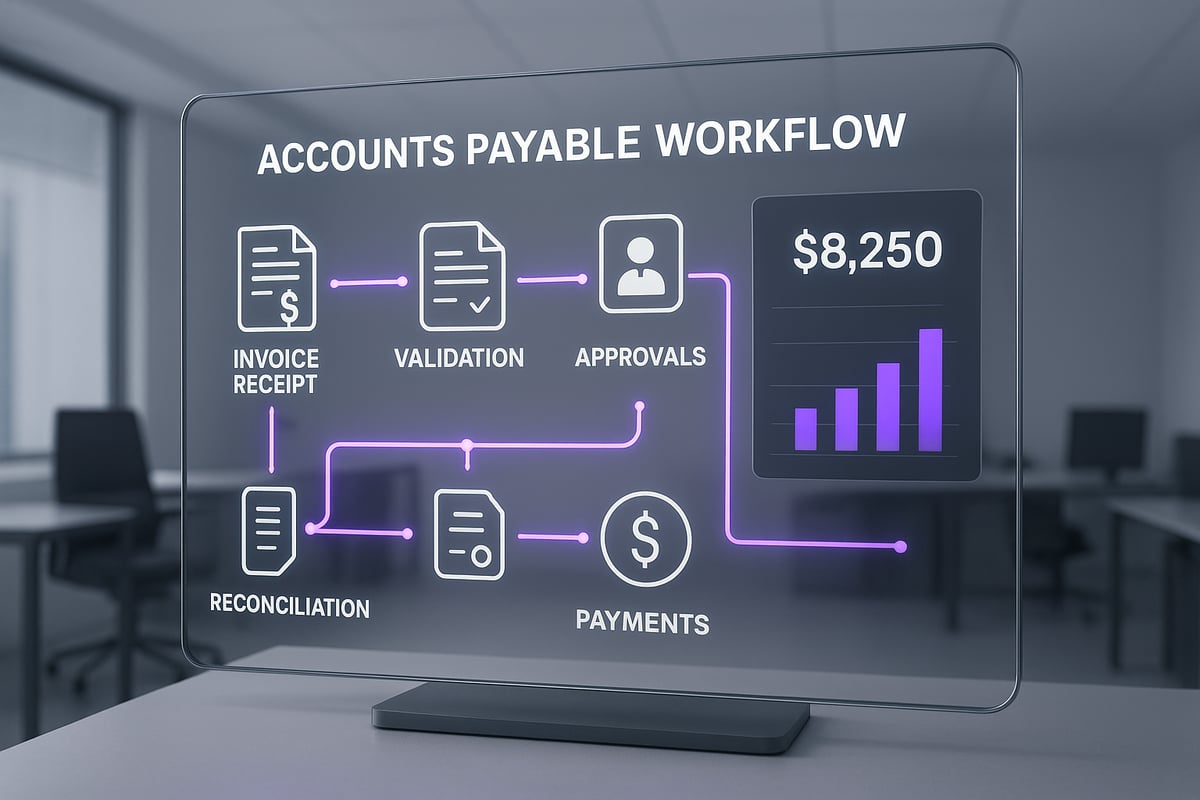
Defining Accounts Payable in 2026
In 2026, accounts payable is no longer a back-office afterthought. It is a dynamic, digitally transformed process that bridges vendors, finance, and compliance teams. Digital transformation has replaced paper invoices with electronic data interchange (EDI), automated portals, and seamless integration with ERP systems. This evolution means AP plays a direct role in business health, with real-time tracking of obligations and spending. Both SMEs and large enterprises now rely on a robust accounts payable workflow to reduce risk, improve vendor relations, and support agile decision-making.
Key Components of a Modern AP Workflow
A modern accounts payable workflow includes several essential stages: invoice receipt, data capture, validation, approval, payment, and reconciliation. For example, invoices may arrive via email, supplier portals, or EDI, then move through automated data capture and validation. A typical workflow map reveals how digital processes eliminate bottlenecks like lost invoices or approval delays. Industry studies show automation can cut invoice processing times by over 70 percent. For a deeper dive into one critical stage, see this guide on Accounts Payable Invoice Processing.
Common Challenges in AP Processes
Despite advancements, common accounts payable workflow challenges persist. Late payments, duplicate invoices, and fraud schemes remain threats, often stemming from manual entry or fragmented systems. According to recent reports, companies lose an average of $12 per invoice due to errors and spend hours resolving discrepancies. These issues strain supplier relationships and disrupt cash flow. To counteract this, organizations are investing in stronger internal controls, such as automated duplicate detection and multi-step approval processes, to safeguard their workflow.
The Business Case for Workflow Optimization
Optimizing the accounts payable workflow delivers measurable returns. AP automation studies report ROI improvements of up to 400 percent, driven by cost savings, risk mitigation, and better vendor terms. Case studies from leading firms show reductions in payment cycle times and error rates, helping businesses negotiate early payment discounts and avoid compliance penalties. As regulatory demands grow in 2026, the strategic role of AP becomes even clearer. Investing in workflow optimization is now a necessity, not an option, for organizations seeking resilience and a competitive edge.
Step-by-Step Accounts Payable Workflow for 2026
Optimizing your accounts payable workflow is essential for financial health and operational efficiency in 2026. Each stage in the process plays a unique role in reducing risk, saving time, and supporting compliance. Let’s break down each key step, highlighting real-world best practices and actionable tips for a future-ready workflow.
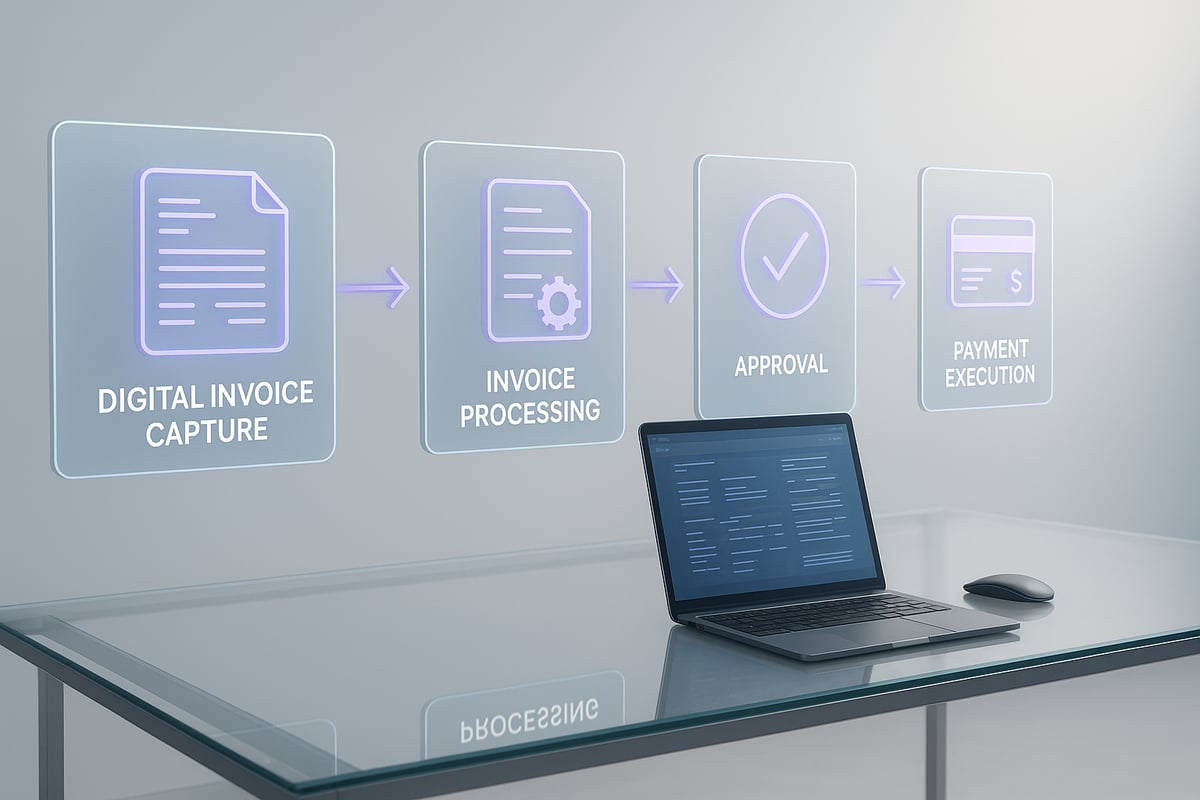
Step 1: Invoice Receipt and Capture
The accounts payable workflow begins with receiving invoices through various channels: email, electronic data interchange (EDI), supplier portals, or even paper. In 2026, digital capture solutions dominate, using optical character recognition (OCR) to extract invoice data instantly.
Best-in-class organizations adopt automated intake to minimize lost invoices and errors. A recent survey found that automation can cut invoice processing time by up to 60 percent compared to manual entry. For example, a mid-size firm transitioning from paper to a fully digital intake saw lost invoices drop to zero within three months.
Implementing integrated AP and payment automation solutions, as outlined in the AP and Payment Automation Overview, further streamlines this phase. The right setup ensures your accounts payable workflow starts strong, setting the tone for downstream efficiency.
Step 2: Invoice Validation and Data Entry
Once captured, invoices must be validated. This means matching invoice data to purchase orders, checking vendor information, and verifying line items. With manual entry, error rates can reach 3 percent or higher, leading to costly corrections.
Modern accounts payable workflow platforms connect directly with ERP systems, enabling real-time validation and flagging mismatches automatically. Regulatory compliance checks, like VAT validation, can also be built in at this stage.
A practical example is using artificial intelligence to automatically flag invoices with missing PO numbers or mismatched totals, reducing manual review time and improving compliance. This step is critical for maintaining an accurate accounts payable workflow.
Step 3: Approval Workflow
Approval is central to a secure accounts payable workflow. Routing rules determine which invoices need department head review or higher-level sign-off, depending on value or exceptions.
Automated approval flows speed up cycle times, with some organizations reporting a reduction from 10 days to just 2 days per invoice. Mobile approval capabilities allow managers to review and approve invoices remotely, supporting hybrid workforces.
During the shift to remote work, many companies adopted mobile-first approval tools, ensuring the accounts payable workflow continued uninterrupted, even outside the office.
Step 4: Payment Authorization and Execution
After approval, payment authorization ensures only valid invoices are paid. Dual controls and segregation of duties reduce fraud risk. Payment scheduling helps optimize cash flow, while a range of methods—ACH, Single Euro Payments Area (SEPA), wire, and virtual cards—give flexibility.
Secure authorization methods, like multi-factor authentication, further protect the accounts payable workflow. Some firms implement payment holds for flagged invoices, preventing unauthorized disbursements.
A real-world case: introducing payment holds for high-risk vendors led to a 40 percent drop in suspicious transactions, safeguarding company funds within the accounts payable workflow.
Step 5: Reconciliation and Reporting
Reconciliation matches payments to invoices and bank statements, providing a clear audit trail. Automated reconciliation tools can reduce errors by up to 80 percent, according to recent industry data.
This step is vital for audit readiness and financial transparency. Accounts payable workflow platforms now offer real-time dashboards, simplifying month-end close and reducing manual effort.
For example, companies that switched to automated reconciliation shaved days off their month-end process, freeing up finance teams for higher-value tasks.
Step 6: Recordkeeping and Audit Trail
Effective accounts payable workflow management requires digital document storage and robust audit trails. Retention policies should align with legal and regulatory standards, often requiring invoice records to be kept for up to seven years.
Features like searchable archives and granular access controls are now standard. Responding to audit requests becomes far easier when every document is digitally indexed and instantly retrievable.
A recent audit found that firms with end-to-end digital records responded to documentation requests 50 percent faster than those relying on paper files or fragmented systems.
Step 7: Continuous Improvement and Feedback
The final step in an optimized accounts payable workflow is ongoing review and refinement. Regularly analyze key performance indicators (KPIs) such as cycle time, error rate, and cost per invoice.
Establish feedback loops with finance and procurement to identify bottlenecks and improvement areas. Tools offering workflow analytics and benchmarking support quarterly process improvement sprints.
One global company saw a 15 percent boost in AP processing speed after implementing quarterly reviews and acting on team feedback, showing that continuous improvement is a cornerstone of a resilient accounts payable workflow.
The Role of Automation and Technology in AP
Automation is fundamentally changing the accounts payable workflow landscape. With the rapid adoption of advanced platforms, businesses now have access to smarter, more efficient processes than ever before. This transformation is not just about speed, but about boosting accuracy, control, and strategic insight across the entire accounts payable workflow.
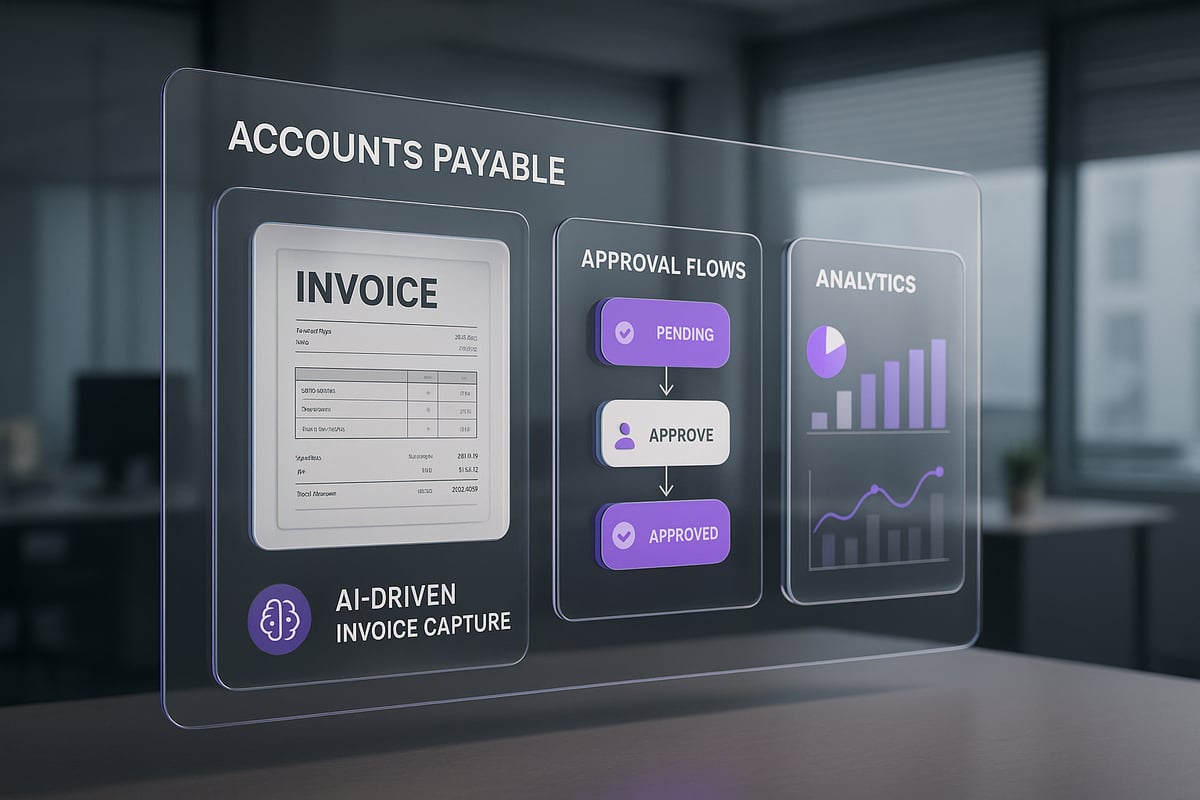
Top AP Automation Tools and Features for 2026
Selecting the right platform is crucial for optimizing any accounts payable workflow. Leading solutions like Sage, QuickBooks, and Coupa offer robust AI-powered invoice capture, real-time approval routing, and seamless ERP integration.
Key features to look for include:
- Automated data extraction with OCR and machine learning
- Customizable approval hierarchies
- API support for integration with financial systems
- Mobile access for remote approvals
Adoption rates for these tools continue to rise, especially among mid-sized and enterprise organizations. For example, a recent survey found that over 60% of finance teams have implemented at least one automation tool in their accounts payable workflow by 2026.
Benefits of Automated AP Workflows
The impact of automation on the accounts payable workflow is measurable and significant. Companies report reducing invoice processing times from weeks to days, or even hours, while also lowering manual error rates by up to 80%.
Automated systems help cut costs, prevent duplicate payments, and improve supplier relationships through faster, more reliable payouts. According to Accounts Payable Automation Trends 2025 Every CFO Must Know, organizations see an average of 60% cost savings after automating their accounts payable workflow. These improvements make scaling operations far more manageable.
Overcoming Implementation Challenges
Transitioning to an automated accounts payable workflow is not without hurdles. Common barriers include upfront costs, resistance to change, and integration complexities with legacy systems. Research indicates that nearly 30% of automation projects stall due to insufficient user training or unclear change management strategies.
To address these challenges, consider:
- Phased rollouts instead of all-at-once launches
- Comprehensive user training and ongoing support
- Careful mapping of current workflows before automation
A well-planned implementation ensures the accounts payable workflow delivers on its promise of efficiency without disrupting daily operations.
Future Trends: AI, Blockchain, and Beyond
Looking ahead, the accounts payable workflow will be shaped by emerging technologies. Artificial intelligence is already enhancing anomaly detection and predictive analytics, helping teams spot irregularities before they become problems. Blockchain, while still in early adoption, offers new levels of transparency and security for payment validation.
Industry analysts predict that by 2026, over 40% of large organizations will use AI-powered tools for at least one stage of their accounts payable workflow. Early adopters are already seeing better forecasting and real-time insights, positioning themselves ahead of the curve.
Security and Compliance in Automated AP
Security and compliance are top priorities for any accounts payable workflow. Modern platforms provide robust encryption, detailed access controls, and comprehensive audit logs. These features are essential for meeting GDPR and other global data privacy regulations.
Recent years have seen an uptick in attempted AP fraud and data breaches, so strong internal controls are critical. Automated audit trails and secure digital records make it easier to respond to audits and protect sensitive financial data. By focusing on security, businesses ensure their accounts payable workflow is both efficient and resilient.
Ensuring Compliance and Managing Risk in AP
Modern accounts payable workflow management faces an evolving regulatory and risk landscape. As organizations prepare for 2026, compliance and risk mitigation are no longer optional—they are foundational for business resilience. Let’s break down the essential components that keep your AP operations audit-ready, secure, and future-proof.

Regulatory Landscape for AP in 2026
The regulatory environment for accounts payable workflow is growing more complex by the year. In 2026, organizations must comply with major frameworks like the EU’s e-invoicing mandates, US IRS 1099 changes, and global tax reporting standards. Since 2024, many countries have shifted to real-time or near-real-time VAT reporting, requiring AP teams to adapt rapidly.
For instance, a recent EU VAT directive now requires suppliers to submit e-invoices through government-approved platforms, with penalties for late or incorrect submissions. Companies operating internationally may face additional localization requirements, such as SAF-T file formats or local language documentation. Staying agile in your accounts payable workflow is critical for maintaining compliance and avoiding costly fines.
Fraud Prevention and Internal Controls
Fraud remains a top threat to any accounts payable workflow. Common schemes include phishing emails, fake vendor setups, duplicate payments, and invoice manipulation. According to the Association of Certified Fraud Examiners, the median loss from AP fraud schemes exceeded $120,000 in recent years, with detection often taking months.
Implementing robust internal controls is non-negotiable. Segregation of duties, dual approval limits, and real-time transaction monitoring are essential. Automation platforms such as Sage Accounts Payable Automation can enforce these controls, flag suspicious transactions, and reduce reliance on manual checks. One global company recently uncovered a duplicate payment fraud through automated workflow alerts, saving over $80,000 and strengthening their internal policies.
Data Privacy and Protection
The accounts payable workflow involves processing sensitive data, including vendor bank details and payment records. Compliance with GDPR and local data protection laws is mandatory. Best practices include encrypting data in transit and at rest, using secure supplier portals, and restricting access based on user roles.
Recent industry reports suggest that nearly 30% of data breaches in finance involve exposed AP records, often due to weak passwords or unsecured file sharing. Implementing granular access controls and regular audits of user permissions helps reduce exposure. For example, a mid-sized enterprise recently adopted role-based access, limiting invoice approval rights to designated finance managers, which significantly lowered their risk profile.
Audit Readiness and Documentation
Preparing for audits is a key aspect of accounts payable workflow management. Electronic recordkeeping and detailed audit trails are now standard requirements. Auditors increasingly expect digital documentation that is both easily searchable and tamper-evident.
Best practices include maintaining a clear log of all invoice approvals, payment authorizations, and communication with vendors. Audit failure rates often stem from incomplete documentation or inconsistent workflows. Workflow automation tools provide timestamped logs and document repositories, making it far easier to respond to audit requests. One finance team reduced audit prep time by 40% after implementing automated document tracking and retrieval.
Business Continuity and Disaster Recovery
Ensuring the continuity of your accounts payable workflow during crises is essential for operational stability. Digital backups, cloud-based AP platforms, and secure remote access are now core components of disaster recovery plans. According to recent surveys, AP downtime can cost enterprises thousands per hour in delayed payments and damaged supplier trust.
A robust continuity plan includes regular data backups, multi-site redundancy, and tested remote work protocols. During a recent cyberattack, one organization maintained payment operations by switching to their secure cloud AP system, with minimal disruption. Investing in resilient infrastructure ensures your accounts payable workflow can weather both cyber threats and unexpected disruptions.
Future-Proofing Your Accounts Payable Workflow
Staying ahead in finance means making your accounts payable workflow resilient, adaptable, and ready for rapid change. With 2026 on the horizon, future-proofing is not just about technology, but about creating a foundation for compliance, scalability, and sustainability.
Adapting to Regulatory and Market Changes
Keeping your accounts payable workflow compliant requires active monitoring of evolving regulations. Global mandates, like e-invoicing and new VAT requirements, can shift quickly—missing an update could mean costly delays or penalties.
To stay agile, many businesses subscribe to regulatory news feeds, run quarterly compliance audits, and leverage workflow tools with built-in rule updates. For example, sudden e-invoicing mandates in the EU have caught some finance teams off guard, but those using adaptive platforms were able to adjust within weeks.
Staying informed about top trends in accounts payable automation for 2025 can help you anticipate market shifts and integrate new best practices before competitors do.
Building a Scalable AP Infrastructure
A future-ready accounts payable workflow depends on scalable infrastructure. Cloud-based AP systems allow you to expand operations, support multiple entities, and integrate new tools via APIs as your business grows.
Modular software is key—start with essentials like invoice capture and approvals, then add analytics or AI as needed. For example, companies using QuickBooks Accounts Payable Automation often find it easier to scale from small teams to enterprise-level processes without major overhauls.
Scalability also means your accounts payable workflow can flex during busy periods or when new subsidiaries come online, keeping everything running smoothly.
Leveraging Analytics for Continuous Improvement
Continuous improvement starts with data. By embedding analytics into your accounts payable workflow, you can track KPIs like cycle time, error rate, and cost per invoice.
Dashboards offer real-time insights, letting you spot bottlenecks or forecast cash flow needs. Predictive analytics, increasingly common in leading AP teams, help anticipate spend trends and optimize working capital.
Top performers use quarterly reviews to compare against industry benchmarks. For example, one company reduced its average approval cycle time by 30 percent after analyzing workflow data and adjusting routing rules.
Cultivating a High-Performance AP Team
The people behind your accounts payable workflow matter as much as the technology. High-performing teams invest in regular training, cross-functional collaboration, and upskilling to handle new systems and compliance demands.
Remote and hybrid work models are now standard, so soft skills like communication and problem-solving are essential. Successful finance leaders often run process improvement sprints, where AP staff suggest and test workflow tweaks.
One team transformed its operations by rotating roles during quarter-end, uncovering hidden inefficiencies and building broader expertise across the department.
Sustainability and Green AP Practices
Sustainability is becoming a core expectation for accounts payable workflow design. Digital processes, like e-invoicing and paperless document storage, have a measurable impact on reducing your organization’s carbon footprint.
Industry data shows businesses that adopt digital AP workflows can cut paper use by over 80 percent, saving both costs and trees. Engaging suppliers in green initiatives—such as digital-only invoicing—further amplifies these benefits.
For example, a multinational firm recently shifted all payouts to electronic formats, achieving both compliance and sustainability goals while strengthening supplier relationships.
As you think about optimizing your accounts payable workflow for 2026, it’s clear that staying ahead means embracing secure, real time solutions that adapt to changing regulations and business needs. Whether you’re looking to streamline transactions, integrate seamlessly with existing systems, or enhance your team’s efficiency, having the right fintech partner can make all the difference. If you want to explore how Payoro’s innovative platform can help you build a future ready AP process, let’s connect and discuss your goals. You can get in touch with our team to learn more by clicking here: Contact sales
Share article on


Related articles
See all articles iGaming Payout Solutions: How Operators Can Process Player Withdrawals Faster
iGaming operators lose players to slow withdrawals. Learn how modern payout solutions, from SEPA Instant to stablecoin settlement,...

KYC AML Compliance for Payouts: What Every Platform Needs to Know
Learn how KYC and AML compliance requirements apply to payout platforms in the EU. Practical framework for tiered...
Vendor Payouts: How Platforms Can Pay Suppliers Faster and Cheaper
Vendor payouts are slow and expensive for most platforms. Learn how to automate vendor payments, cut cross-border costs,...
Payment Orchestration Explained: Why Platforms Are Ditching Single-Provider Setups
Running payments through a single provider is a single point of failure. Payment orchestration gives platforms the routing,...