
Corpay Cross Border Guide: Navigate Global Payments in 2026

In 2026, sending money across borders is essential for businesses and freelancers, yet complexity and risk still surround every transaction. Whether you are expanding your reach or paying international partners, the right tools matter.
This guide explores how corpay cross border can simplify your global payments. You will discover how the platform works, the latest regulatory updates, and practical steps to make secure, cost-effective payments.
Ready to streamline your cross-border strategy? Dive in for expert tips, provider comparisons, and a clear roadmap to success.
The 2026 Global Payments Landscape: Trends and Challenges
In 2026, the global payments ecosystem is in the midst of unprecedented transformation. As international commerce expands, businesses and individuals face both new opportunities and complex barriers. Understanding these shifts is essential for anyone looking to optimize their corpay cross border strategy and remain competitive.

Evolving Market Dynamics
International trade volumes are soaring, driven by digital platforms and streamlined logistics. In 2025 alone, cross-border B2B payments spiked by 30 percent year-over-year, reflecting the surge in global business activity. Customers and suppliers now expect instant, seamless payments, regardless of geography.
Demand for multi-currency and multi-platform solutions is at an all-time high. Merchants need to manage transactions in dozens of currencies and across various payment rails. This complexity pushes organizations to seek out providers like corpay cross border, which offer unified solutions for a fragmented landscape.
Real-time payment expectations are no longer limited to domestic transfers. Global clients want speed and transparency, and businesses must adapt or risk falling behind.
Regulatory and Compliance Shifts
The regulatory landscape is evolving rapidly. New payment regulations in the EU, UK, and US are raising the bar for security, transparency, and consumer protection. Anti-money laundering (AML) and know your customer (KYC) rules are stricter than ever, requiring robust onboarding and transaction monitoring.
Data localization and privacy mandates mean that payment data often must remain within specific jurisdictions. This affects transaction flows and can complicate cross-border operations. Providers such as corpay cross border invest heavily in compliance infrastructure, helping clients navigate these shifting requirements.
Staying current with these changes is non-negotiable for risk management and operational continuity.
Technological Innovations
Technology is redefining how global payments work. Blockchain and distributed ledger technologies are making cross-border settlements faster and more secure. Artificial intelligence (AI) now powers fraud detection, flagging suspicious activity in real time.
API-based integrations have become standard, allowing companies to automate payment workflows and connect corpay cross border with their ERP or accounting platforms. These innovations lower costs, speed up processing, and reduce manual errors.
For a deeper dive into emerging payment technologies and what’s next, see this overview of Cross-Border Payment Trends for 2026.
Key Challenges for Businesses and Individuals
Despite the progress, significant challenges persist. Hidden fees and unpredictable exchange rates erode margins and create budgeting headaches. Payment delays often occur due to intermediary banks, compliance checks, or cut-off times.
Reconciling payments across multiple currencies and platforms is a pain point. According to SWIFT, 60 percent of SMEs name lack of transparency as their top cross-border payment issue. Choosing a transparent provider like corpay cross border can alleviate many of these headaches.
Below is a quick summary of common challenges:
| Challenge | Impact |
|---|---|
| Hidden Fees | Reduced profit, surprise |
| FX Rate Fluctuations | Budgeting uncertainty |
| Payment Delays | Cash flow disruptions |
| Complex Reconciliation | Operational inefficiency |
Opportunities for Optimization
Even with obstacles, 2026 offers strategic opportunities. Businesses can reduce costs and boost speed by selecting the right provider and leveraging digital platforms for reporting and control.
Adapting to new payment corridors, such as instant rails in emerging markets, can open growth avenues. Integrating corpay cross border solutions lets organizations automate processes, manage risk, and stay ahead of regulatory changes.
Forward-looking companies will continue to refine their approach, using data and technology to gain a competitive edge in the global payments arena.
Understanding Corpay Cross Border: Features, Benefits, and Use Cases
Navigating international payments is no small feat, but corpay cross border stands out as a modern solution for businesses and professionals who need to move money around the globe. Understanding what sets corpay cross border apart means looking at its history, platform strengths, and the practical impact it has on users in 2026.
What is Corpay Cross Border?
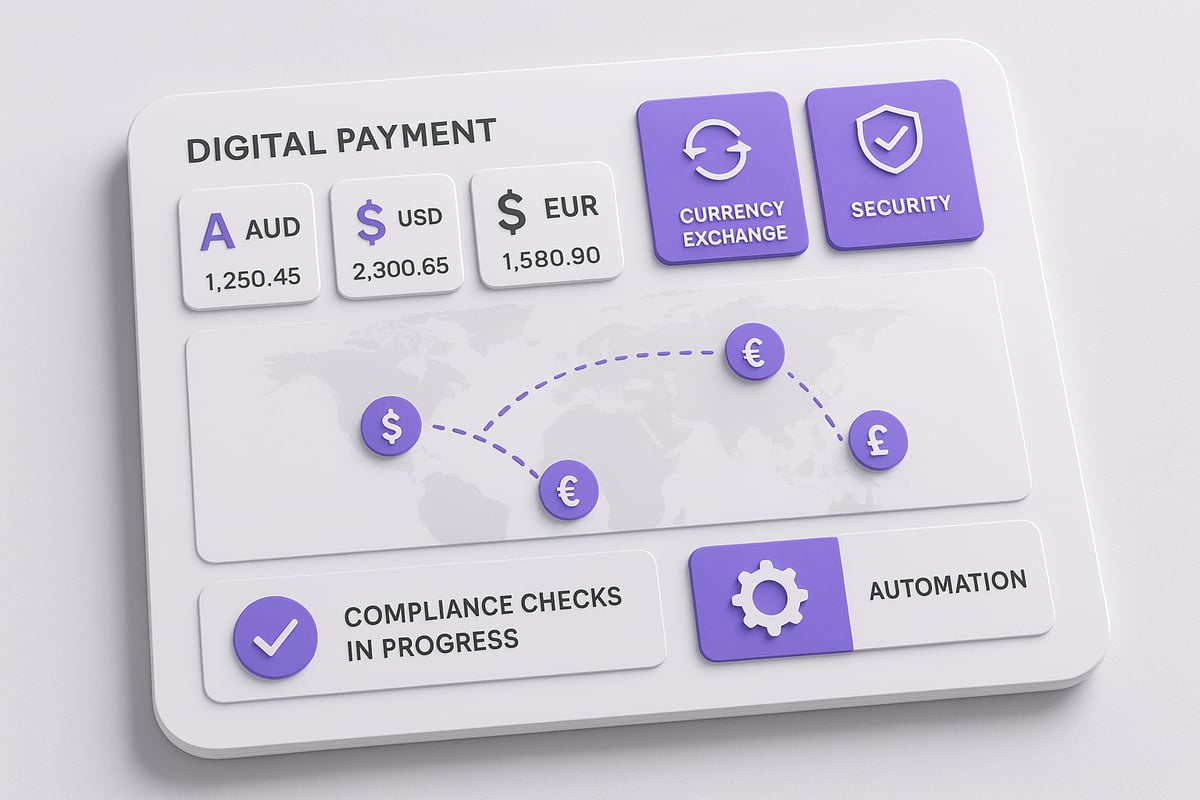
Corpay cross border began as a specialized arm of Corpay, focusing on simplifying international transactions for businesses of all sizes. Today, it is recognized for its robust infrastructure and global reach, supporting payments across 100+ countries and 145+ currencies. The platform delivers a suite of services, including international payments, FX risk management, and automated expense solutions.
The core of corpay cross border is its ability to make cross-border payments reliable and transparent. Whether you are sending supplier payments, settling invoices, or managing payroll, the platform adapts to varied needs. Supported payment types include wire transfers, local payment rails, and ACH options, which cover a wide spectrum of operational requirements.
Key Features and Platform Capabilities
Corpay cross border is built with features that address common pain points in international payments. Users can lock in real-time FX rates, ensuring predictable costs for every transaction. The platform’s transparent pricing model means no more hidden fees or surprise charges.
A standout feature is the availability of multi-currency accounts, recently launched to enable seamless management of both local and foreign currencies. This is particularly beneficial for companies expanding to new markets, as detailed in Corpay’s Multi-Currency Accounts Launch. Automated compliance tools help businesses stay current with evolving regulations, while API integrations allow payments to flow directly from ERP and treasury systems for added efficiency.
Business Use Cases
For businesses, corpay cross border transforms international payments from a manual chore to a streamlined process. Batch payment capabilities make it easy to pay multiple overseas suppliers in one go, dramatically reducing administrative overhead. The platform supports fast payouts to employees and contractors in different countries, enabling organizations to attract global talent.
A European SME, for example, reported a 40 percent reduction in payment processing time after adopting corpay cross border. Treasury teams also rely on the platform to manage cash flow across multiple subsidiaries, consolidating accounts and simplifying reconciliation.
Benefits for Individuals and Freelancers
Corpay cross border is not just for large enterprises. Freelancers and consultants who work with clients abroad appreciate the ability to receive payments in their local currency, which reduces conversion losses. The platform’s fee structure is typically lower than traditional banks, making it attractive for those handling frequent international transfers.
Round-the-clock platform access and dedicated customer support help individuals resolve issues quickly. This ensures that self-employed professionals can focus on their work, not on chasing delayed payments.
Security and Trust
Security is foundational to corpay cross border. The platform employs bank-grade encryption and advanced fraud detection to safeguard every transaction. Regulatory licenses and compliance certifications provide assurance that the service meets strict financial standards.
Client funds are held in segregated accounts, separate from company operating funds. If disputes arise, established resolution procedures help protect both senders and recipients, giving users confidence in the integrity of every cross-border transaction.
Limitations and Considerations
Despite its strengths, corpay cross border has certain limitations to weigh. Service availability depends on your country and the currencies you wish to transact in. Some payment corridors may have minimum transaction sizes or specific regulatory requirements.
Fee structures can vary by region and payment method, so it pays to review these details before initiating large transfers. Customer support is accessible through multiple channels, but response times may fluctuate depending on location and time zone.
Step-by-Step: How to Make a Cross Border Payment with Corpay in 2026
Navigating international payments can feel daunting, but with the right approach, it becomes a manageable process. The corpay cross border platform is designed to simplify each step, ensuring you remain compliant, efficient, and in control of your funds. Whether you are a business streamlining batch supplier payouts or an individual receiving overseas income, following a clear workflow is essential. This section walks you through every stage, from onboarding to reconciliation, highlighting practical details and expert insights for 2026. For those new to international transactions or wanting to compare methods, you might also find value in this overview of cross border payment solutions.
Account Setup and Verification
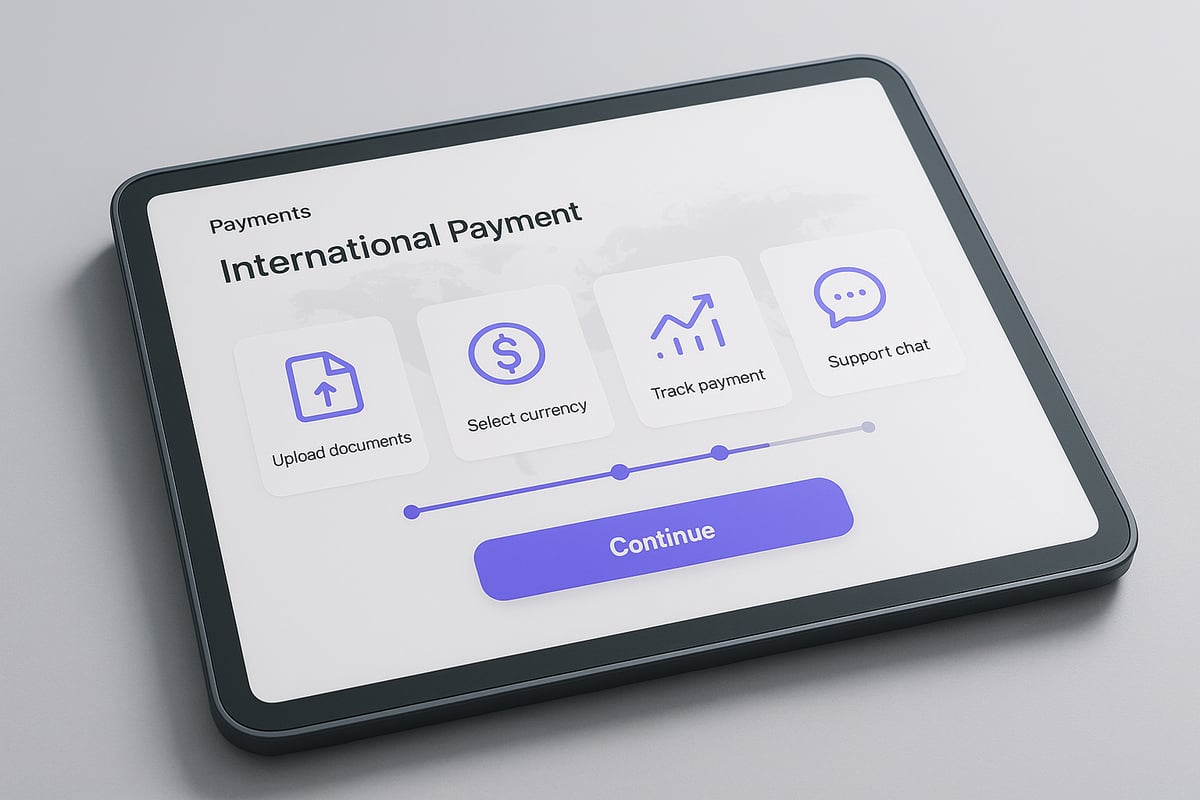
To begin using corpay cross border, you’ll first need to create an account. The onboarding process is straightforward but requires attention to detail. Gather the necessary documents, such as government-issued ID, proof of business registration, and recent utility bills. These are essential for meeting Know Your Customer (KYC) and Anti-Money Laundering (AML) requirements.
After submitting your application, expect a verification timeline of one to three business days for most small and medium enterprises. During this period, the compliance team may request additional documentation or clarification. Ensuring your documents are accurate and up-to-date helps avoid delays. Once verified, you’ll have access to the corpay cross border dashboard and can start setting up payment beneficiaries.
Setting up your beneficiaries early is a best practice, especially if you plan to process multiple payments in different currencies. The platform supports a wide range of countries, making it suitable for businesses with diverse international partners.
Initiating a Payment
Once your account is active, the next step is to initiate a payment. Start by selecting your payee from the saved beneficiary list, or enter new recipient details. The corpay cross border platform allows you to choose the destination country and currency, supporting both wire transfers and local payment rails.
You’ll then specify the payment amount and desired delivery method. The system provides a real-time currency conversion quote, displaying both the FX rate and any applicable margins. Before confirming, review the full fee breakdown, which ensures transparency and helps you assess the true cost of the transaction.
For businesses, batch processing is available—ideal for paying multiple suppliers or contractors at once. Individuals can also benefit from the streamlined workflow, which minimizes manual input and reduces the risk of errors. Always double-check recipient information before proceeding to avoid common mistakes.
Compliance and Documentation
Compliance is a critical aspect of every corpay cross border transaction. Depending on your payment size, destination, and purpose, you may be prompted to upload supporting documents. These could include invoices, contracts, or proof of goods and services.
The platform uses automated compliance screening to flag high-risk transactions. If a payment is flagged, you’ll receive a notification and may be asked for further verification. This process protects both you and your recipients by preventing fraud and ensuring adherence to international regulations.
Corpay cross border’s compliance engine adapts to evolving rules in regions like the EU, UK, and US. Staying proactive with your documentation speeds up approvals and reduces the chance of payment delays. Save time by preparing digital copies of your most common documents in advance.
Payment Execution and Tracking
After compliance checks are cleared, you can execute your payment. Confirm all details—payee, amount, currency, and delivery method—before final submission. Upon confirmation, you’ll receive a unique transaction reference for tracking.
The corpay cross border dashboard offers real-time status updates, so you know exactly where your funds are in the process. Notifications via email or SMS keep you informed of each milestone, from initiation to settlement. Delivery times vary by corridor; for example, EU to US transfers typically settle the same day, while EU to Asia may take one to two days.
If you’re managing frequent payments, set up automated notifications to monitor progress without logging in repeatedly. This level of visibility helps you plan cash flow and communicate confidently with your payees.
Reconciliation and Reporting
Once funds are delivered, reconciliation becomes the focus. Corpay cross border provides downloadable payment confirmations and comprehensive audit trails for every transaction. These records are crucial for financial reporting and compliance audits.
Integrate the platform with your accounting or ERP system to automate reconciliation, especially if you handle high payment volumes. For example, a business processing over 100 payments monthly can use automated matching to reduce manual workload and minimize errors.
Detailed reporting tools let you filter transactions by date, currency, or recipient, simplifying month-end close. Regularly review your reports to identify trends, spot anomalies, and improve future payment strategies.
Troubleshooting and Support
Occasionally, issues arise—payments may be delayed, returned, or require further clarification. The corpay cross border support team is accessible via multiple channels, including live chat, email, and phone. They offer step-by-step assistance, helping you resolve problems efficiently.
If a payment fails, review the error message for guidance, such as incorrect beneficiary details or missing documentation. Escalation procedures are in place for urgent cases, ensuring your query gets the attention it deserves.
To avoid recurring issues, keep beneficiary information current and set reminders for document updates. Building a relationship with the support team can expedite future resolutions. With the right approach, even complex challenges become manageable on the corpay cross border platform.
Comparing Corpay to Other Cross Border Payment Providers in 2026
Choosing the right cross-border payment partner is a critical decision in 2026. Businesses and freelancers face a crowded field, but not all solutions deliver the same transparency, speed, or integration. The corpay cross border platform stands out, but how does it compare with other leading providers on the market?
Leading Competitors Overview
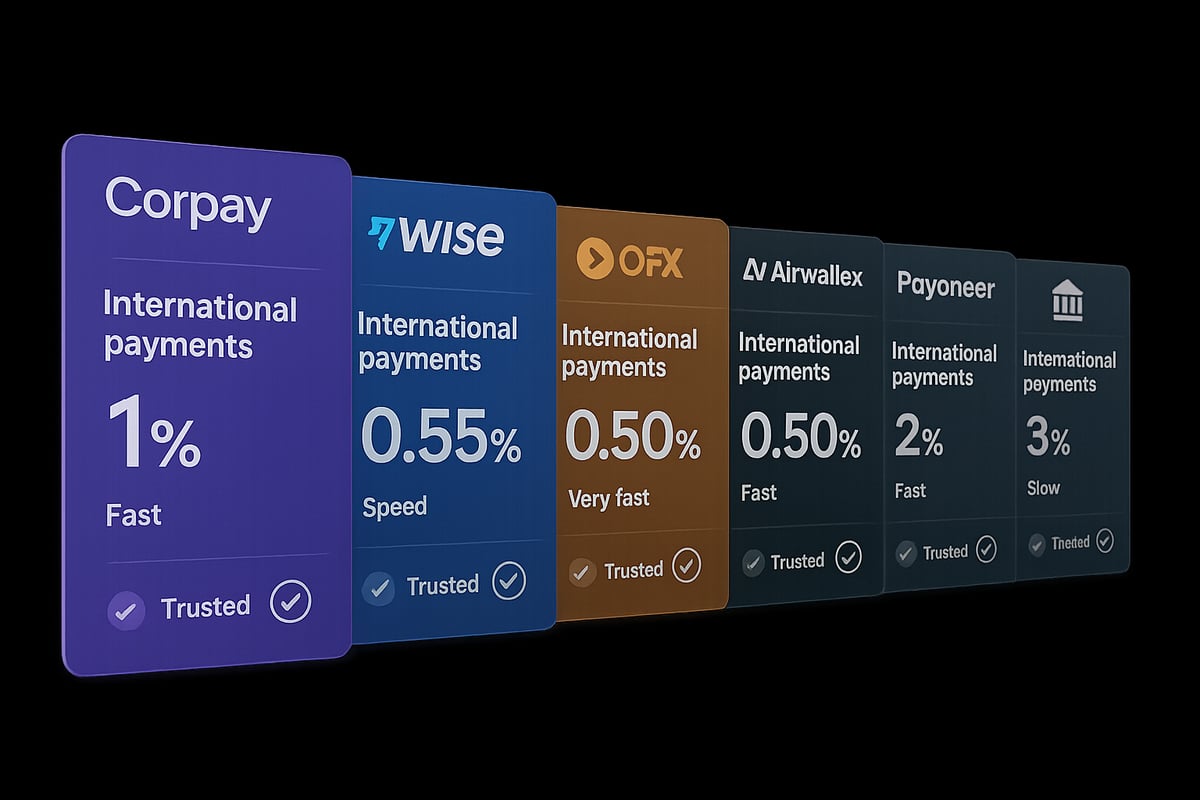
The corpay cross border ecosystem competes with a new generation of fintechs and established banks. Wise (formerly TransferWise) dominates for ease of use and transparent fees, while OFX and Airwallex are favored for business features. Payoneer excels in multi-currency payouts, especially for freelancers and marketplaces. Traditional banks still handle a huge volume, but typically lag in speed and cost.
For a broader look at technology choices, see this review of international money transfer software, which highlights how platforms like Corpay are reshaping the landscape.
Pricing and Fee Structures
Price transparency is a top concern. The corpay cross border platform publishes clear FX margins and fee breakdowns, unlike many banks that often bury charges within exchange rates. Wise is known for low, upfront fees, while OFX sometimes offers volume discounts. Airwallex and Payoneer use tiered pricing based on transaction size.
| Provider | Sending Fee | FX Margin | Extra Charges |
|---|---|---|---|
| Corpay | $10 | 0.3% | None |
| Wise | $8 | 0.4% | None |
| OFX | $15 | 0.5% | Varies |
| Airwallex | $0-$10 | 0.3%-0.6% | None |
| Payoneer | $15 | 0.5% | Withdrawal |
| Bank (average) | $30 | 1.5% | Hidden fees |
The corpay cross border approach is often more cost-effective for businesses moving higher volumes.
Speed and Delivery Times
In 2026, speed is non-negotiable. With corpay cross border, same-day settlement is possible for many corridors, rivaling fintechs like Wise and Airwallex. Banks, on the other hand, frequently require 2-4 days due to legacy processes and compliance checks. According to McKinsey, 85% of fintech payments now settle within 24 hours.
Factors like compliance reviews or cut-off times can still impact delivery. Corpay’s real-time tracking helps users stay informed, reducing uncertainty and enabling better planning.
User Experience and Platform Integrations
User experience sets corpay cross border apart. Its dashboard simplifies payment initiation, batch processing, and reconciliation. Wise and Airwallex also prioritize usability, but Corpay’s deep integrations with ERP, accounting, and treasury systems appeal to finance teams seeking automation.
APIs for bulk payments and customizable reports are available across top fintechs, but Corpay’s reporting tools are especially robust. Mobile apps are standard, yet the corpay cross border interface is praised for clarity and support.
Security, Trust, and Customer Support
Security is paramount in cross-border payments. The corpay cross border platform holds regulatory licenses, segregates client funds, and implements bank-grade encryption. Wise and OFX have strong reputations, while Airwallex and Payoneer are trusted by digital businesses.
Customer support varies widely. Corpay offers dedicated account managers and responsive escalation paths, while some competitors rely more heavily on self-service. User reviews on G2 and Trustpilot often cite trust and support as key reasons for switching to corpay cross border.
Optimizing Your Cross Border Payment Strategy for 2026
In 2026, optimizing your corpay cross border payment strategy means more than just reducing costs. It requires a holistic approach that balances efficiency, compliance, and readiness for rapid change. Whether you run a high-volume business or freelance across borders, the right strategy can unlock faster, more transparent payments and position you for global growth.
Assessing Your Payment Needs
Begin by mapping your international payment flows. List transaction volumes, currencies, and the main payment corridors you use. Identify pain points—are delays, high fees, or reconciliation issues slowing you down?
For example, a SaaS startup expanding into Asia found that evaluating their payment bottlenecks led to a 25% reduction in processing time. If you’re new to the process, understanding the meaning of cross-border transactions is essential for building a solid foundation.
A regular review of your corpay cross border requirements helps you prioritize features and providers that match your operational needs.
Reducing Costs and Maximizing Efficiency
Cost control is central to any smart corpay cross border strategy. Compare FX margins, seek out volume-based discounts, and ask providers about transparent fee structures. Scheduling large payments when rates are favorable can yield significant savings.
Consider using multi-currency accounts to limit unnecessary conversions. Here’s a quick checklist:
- Negotiate fees based on your typical volumes
- Use batch payments to minimize charges
- Review hidden costs in provider agreements
With the right approach, businesses often see a 10–20% reduction in total payment expenses.
Leveraging Technology and Automation
Integrating your corpay cross border platform with ERP or accounting systems streamlines workflow and reduces manual errors. APIs can automate bulk payments, freeing up your team for higher-value tasks.
For example, automating payroll for global contractors ensures accurate, on-time payouts, even across multiple currencies. Key steps include:
- Setting up secure API connections for real-time payment initiation
- Using dashboards for instant reconciliation
- Enabling automated alerts for failed or delayed payments
Invest in platforms offering robust automation to future-proof your operations.
Managing Risk and Compliance
A successful corpay cross border payment strategy must address regulatory changes and currency risk. Tools like forward contracts or options help hedge against FX volatility.
Stay updated on local compliance requirements—especially AML (Anti-Money Laundering) and KYC (Know Your Customer) standards. Implement strong internal controls:
- Maintain audit trails for all transactions
- Schedule regular compliance reviews
- Use provider tools for automated regulatory reporting
Proactive risk management keeps your payments secure and avoids costly delays.
Preparing for Future Trends
The corpay cross border landscape is shifting fast. Instant payment networks and digital currencies are becoming mainstream. For example, India and SE Asia’s Instant Payment Platform aims to enable real-time retail payments by 2026, opening new corridors for global commerce.
Keep an eye on central bank digital currencies (CBDCs) and regional initiatives. Diversify your provider relationships and invest in staff training to stay agile. Regularly review your strategy to build resilience for whatever the next wave of innovation brings.
Expert Insights: Real-World Stories and Pro Tips for Global Payments
Navigating global payments in 2026 demands more than just technology. It takes insight, adaptability, and the right partners. Drawing from real-world experiences with corpay cross border, this section delivers lessons, actionable strategies, and future-focused guidance for anyone handling international transactions.
Lessons from Successful Businesses
Businesses that thrive internationally often share a common thread: they adapt quickly and leverage platforms like corpay cross border to streamline operations. Take a mid-sized European retailer that expanded into over ten countries within two years. By centralizing payments through corpay cross border, they reduced reconciliation times, gained real-time FX transparency, and improved supplier trust.
Another example comes from a creative agency managing freelance payouts across continents. Before switching, delays and hidden fees were constant headaches. With corpay cross border, their team set up batch payments, locked in competitive rates, and accessed support in multiple languages. Freelancers reported getting paid in local currency with fewer deductions, making the agency a preferred client.
Success with corpay cross border often hinges on understanding both the platform features and the nuances of each payment corridor.
Common Pitfalls and How to Avoid Them
Even with advanced platforms, mistakes can undermine your payment strategy. One frequent pitfall is underestimating compliance requirements. Missing documentation or incomplete KYC details can stall payments for days. With corpay cross border, automated alerts and document uploads help, but a proactive approach is best.
Timing FX conversions is another challenge. Rates can shift rapidly, and locking in a favorable rate is crucial. Some users forget to review the FX margin or overlook currency conversion fees, erasing savings.
Volume-based discounts are often missed, especially by SMEs. Consolidating payments or negotiating based on projected volumes can unlock better terms. By regularly reviewing payment data within corpay cross border, businesses can spot opportunities and avoid unnecessary costs.
Pro Tips for 2026
Maximizing results with corpay cross border means staying ahead of trends and using every tool available. Setting up FX rate alerts is a smart move. These notifications help you act quickly when the market shifts, protecting your margins.
Building a relationship with your provider’s support team pays off. Quick responses can make the difference in urgent situations, especially with cross-border compliance or payment tracking. Regularly reviewing new platform features can reveal automation options, such as bulk payments or new payout methods.
For those exploring innovative transfer methods, consider reading about QR code cross border payments as these solutions are gaining traction in emerging markets. Integrating such technologies with corpay cross border may further streamline your global operations.
Future-Proofing Your Payment Operations
Payment landscapes evolve fast, and future-proofing is essential. Adopting provider-agnostic workflows ensures you are not locked into a single system if regulations or costs shift. Training staff on new payment tech and compliance rules keeps your team agile.
Engagement in industry forums and knowledge-sharing groups helps you stay informed. For example, recent updates on the G20’s Cross-Border Payments Initiative highlight how regulatory timelines can impact global transfers. By monitoring such changes, corpay cross border users can anticipate adjustments and maintain resilience.
Regularly auditing your payment process, benchmarking against market leaders, and investing in staff education all contribute to a robust, future-ready operation.
As you’ve seen throughout this guide, navigating cross border payments in 2026 requires the right mix of technology, security, and expertise. If you’re ready to simplify your international transactions, manage both fiat and crypto seamlessly, or want to explore how Payoro’s robust API can integrate with your current systems, let’s take the next step together. Whether you’re a merchant scaling globally or an individual seeking faster, more secure payouts, you don’t have to figure it out alone. Reach out and discover personalized solutions tailored to your unique needs—Contact sales.
Share article on


Related articles
See all articles iGaming Payout Solutions: How Operators Can Process Player Withdrawals Faster
iGaming operators lose players to slow withdrawals. Learn how modern payout solutions, from SEPA Instant to stablecoin settlement,...

KYC AML Compliance for Payouts: What Every Platform Needs to Know
Learn how KYC and AML compliance requirements apply to payout platforms in the EU. Practical framework for tiered...
Vendor Payouts: How Platforms Can Pay Suppliers Faster and Cheaper
Vendor payouts are slow and expensive for most platforms. Learn how to automate vendor payments, cut cross-border costs,...
Payment Orchestration Explained: Why Platforms Are Ditching Single-Provider Setups
Running payments through a single provider is a single point of failure. Payment orchestration gives platforms the routing,...