
QR Cross Border Guide: Your Gateway to Global Payments 2026

Imagine paying for a coffee in Tokyo or receiving freelance payments from Berlin, all with a quick scan—no paperwork, no delays, just instant access. The qr cross border revolution is here, reshaping how money moves worldwide. This guide will empower you to understand, adopt, and optimize this technology for your personal and business needs. Explore the journey of QR payments, learn how cross border QR works, discover integration steps and security tips, and get ahead of regulatory changes and future trends. Ready to master global payments in 2026? Let’s dive in.
The Evolution of QR Payments: From Local to Global
Origins and Adoption of QR Codes in Payments
QR code payments began as a local phenomenon in Asia, especially in China and India. With mobile wallets becoming widespread, consumers quickly shifted from cash to digital payments. The pandemic accelerated contactless options, making QR codes a daily staple for millions. Platforms like Alipay and WeChat Pay dominated markets, processing trillions in transactions.
By 2023, QR payments topped $2 trillion globally. According to the Global QR code adoption report, QR code adoption bridged the gap between physical and digital commerce, making it easier for anyone to pay or get paid. This set the stage for qr cross border solutions to emerge.
Breaking Down Borders: The Rise of Cross Border QR
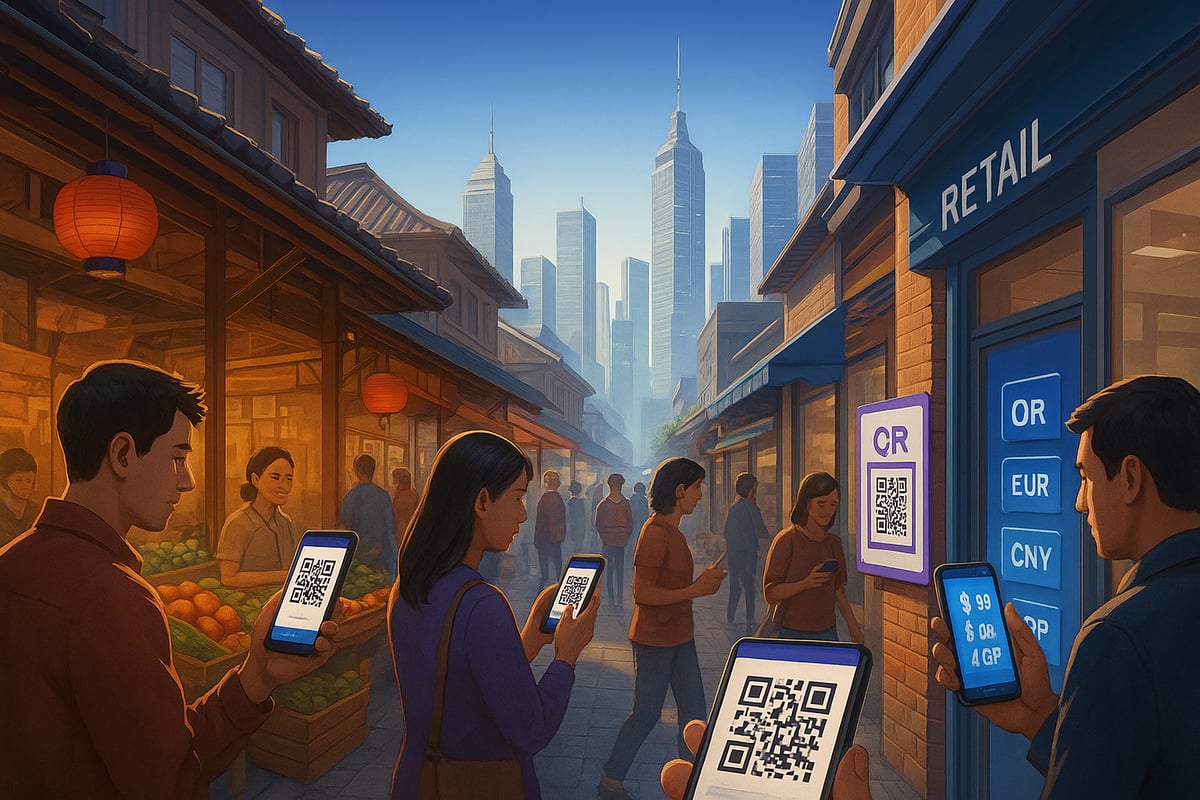
Traditional cross border payments have always been slow, expensive, and tangled with paperwork. The introduction of qr cross border technology changed this narrative. Now, QR codes enable a tourist from Singapore to pay instantly in Thailand or Vietnam using their home wallet app.
Interoperability became the game changer. Payment corridors, such as the one between Singapore and Thailand, show how QR codes connect different financial systems and currencies. By 2024, over 40 countries piloted qr cross border initiatives, turning what once took days into seconds.
Key Drivers Behind Global QR Payment Growth
The growth of qr cross border payments is fueled by several factors. First, smartphone adoption skyrocketed, especially in mobile-first economies. Second, governments and regulators supported open banking and payment innovation, making it easier for providers to launch new solutions.
Merchants demanded low-cost, real-time payment options for international customers. Consumers, meanwhile, expected instant, borderless transactions. The World Bank reported that annual cross border remittances exceeded $800 billion, highlighting the need for efficient qr cross border tools.
| Driver | Impact Example |
|---|---|
| Smartphone growth | Mobile wallets in India |
| Regulatory support | Open banking in EU |
| Merchant demand | Global e-commerce integration |
| Consumer expectation | Instant remittances, travel pay |
Challenges and Lessons Learned
Despite progress, qr cross border adoption faced hurdles. Fragmented standards made interoperability difficult. Security and fraud risks required constant vigilance. Many merchants struggled with onboarding and educating customers on new payment methods.
Some pilot projects failed due to regulatory misalignment or lack of collaboration. The most valuable lesson? Success depends on regulators, banks, and fintechs working together. Only by aligning standards and focusing on education can qr cross border payments reach their full potential.
How QR Cross Border Payments Work: The Mechanics Explained
Sending money globally used to mean filling out forms, waiting days, and wondering about fees. With qr cross border technology, transactions now happen in seconds with just a scan. But what actually happens behind the scenes? Let us break down the mechanics step by step, so you understand exactly how your money moves across borders with QR codes.
Step 1: Initiating a QR Cross Border Transaction
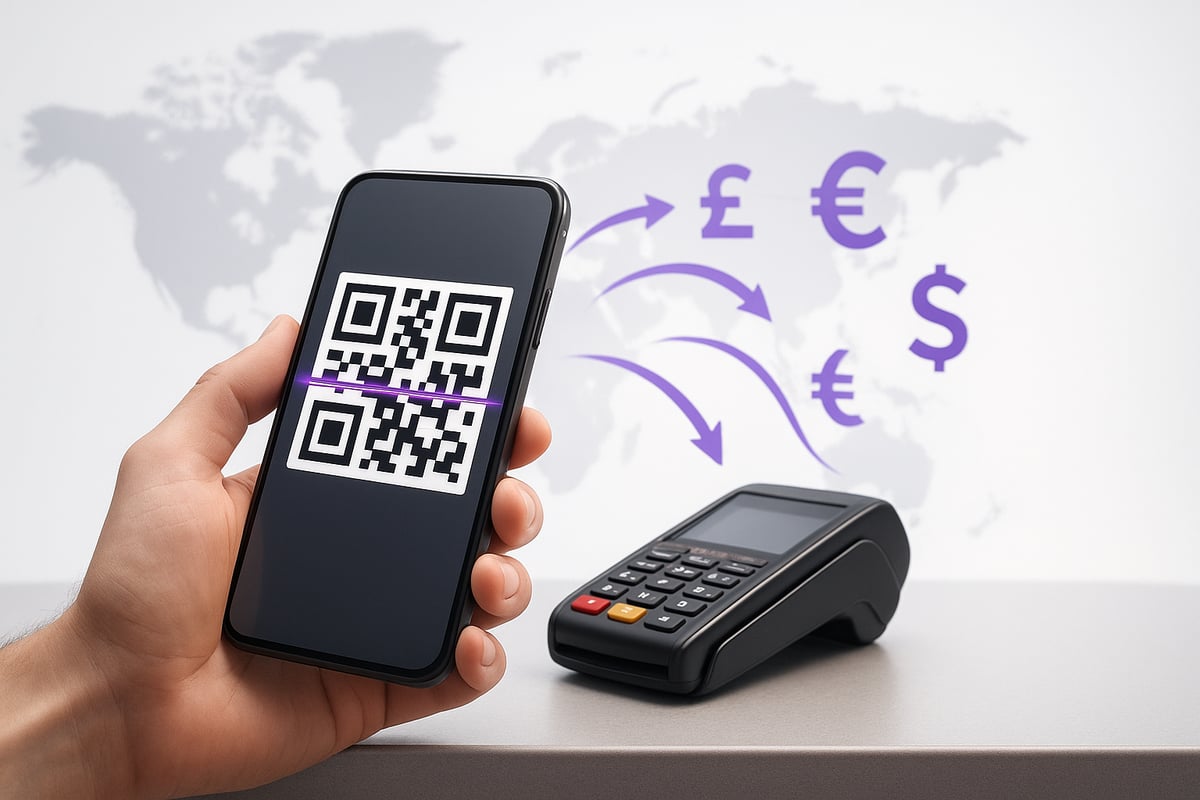
The journey begins when a user opens their payment app and selects the qr cross border option. At the point of sale, they either scan a merchant’s QR code or generate one for the merchant to scan. This triggers the payment process.
For example, imagine a tourist in Paris paying for coffee with their Singaporean e-wallet. The app instantly recognizes this is a qr cross border payment and prepares to route funds internationally. In the background, the system checks both the sending and receiving countries, as well as the payment networks involved. The user only needs to confirm the amount and tap send.
Step 2: Real-Time Currency Conversion and Settlement
Once the qr cross border payment is initiated, the platform detects the currencies involved. Advanced FX engines or stablecoins handle instant conversion, so the merchant receives euros while the payer spends Singapore dollars.
Settlement might flow through correspondent banks or blockchain rails, depending on the provider. Users see transparent exchange rates and fees before confirming. For a deeper look at how providers engineer these seamless solutions, see the Cross border payment solutions guide.
The entire process is designed for clarity, giving both sides confidence in the transaction and minimizing surprises.
Step 3: Compliance, KYC, and AML Safeguards
Every qr cross border transaction must comply with strict financial regulations. Real-time identity verification, known as KYC (Know Your Customer), is performed during the payment. The system screens for sanctioned individuals or countries and runs AML (Anti-Money Laundering) checks.
For instance, payments flagged for unusual patterns may require additional verification before completing. Regulatory frameworks like the EU’s PSD2 and MiCA, as well as local requirements, help protect all parties and maintain trust in the system.
Step 4: Finalizing and Notifying Both Parties
After passing compliance checks, the qr cross border payment is finalized. Both payer and merchant receive instant confirmation, usually through a push notification or receipt within their apps. Digital receipts and transaction logs are generated automatically.
For businesses, this data can sync directly with accounting or ERP systems, simplifying reconciliation. If a refund or dispute arises, the QR ecosystem supports seamless resolution, with clear records and automated workflows.
Key Technologies Powering QR Cross Border Payments
Modern qr cross border systems rely on several core technologies:
| Technology | Role in Payment Process |
|---|---|
| API-driven gateways | Connect banks, wallets, and merchants |
| Blockchain/DLT | Enables fast, transparent settlement |
| AI/ML | Detects fraud, automates compliance |
| Mobile SDKs/NFC | Powers QR generation and scanning |
| Dynamic QR codes | Enhances security and flexibility |
A recent industry report shows that 70% of new payment APIs now support QR and instant settlement, reflecting the rapid evolution of qr cross border infrastructure.
These innovations make cross-border payments more accessible, secure, and reliable for everyone.
Integrating QR Cross Border Payments for Your Business
Adopting qr cross border payments can unlock new markets and simplify global operations, but success depends on a thoughtful integration process. Understanding where your business stands and how to adapt your systems is crucial for a smooth transition.
Assessing Business Readiness and Use Cases
Begin by evaluating your customer base and their payment needs. Are you serving international clients, freelancers, or global shoppers? Map out payment flows for B2B, B2C, and P2P scenarios, identifying where qr cross border payments could streamline operations.
Review your existing point-of-sale (POS) and e-commerce infrastructure. Can your current systems support qr cross border transactions, or will upgrades be necessary? For example, a freelance designer in Berlin might receive payments from clients in Singapore, highlighting the value of instant, low-fee international settlements.
Understanding your unique use cases will help you prioritize features and integrations as you move forward with qr cross border adoption.
Choosing the Right qr cross border Solution
Selecting the right provider is essential for effective qr cross border integration. Focus on criteria like interoperability, transaction fees, supported regions, and settlement speed. Transparent pricing and responsive support should factor heavily into your decision.
Compare platforms by reviewing their multi-currency support, merchant onboarding process, and compliance standards. Global retailers benefit significantly from solutions that handle multiple currencies seamlessly. For a deeper dive into what makes a robust global payout approach, check out global payout strategies for actionable insights.
Choosing a flexible qr cross border partner ensures your business can scale internationally with minimal friction.
Technical Integration: APIs, SDKs, and POS Systems
Technical integration is where qr cross border payments come to life. Start by connecting your existing systems to the provider’s API, enabling real-time transaction processing. Many platforms offer mobile SDKs, allowing you to embed qr cross border functionality directly into your app.
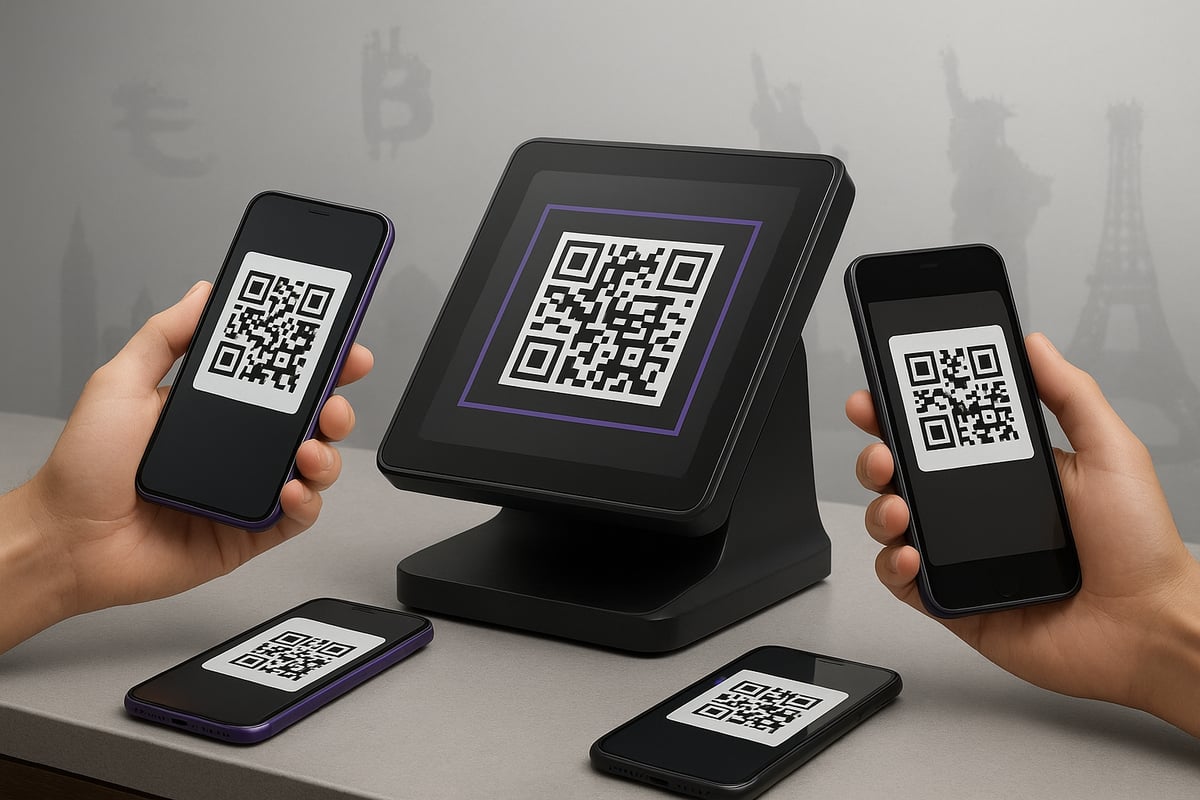
If your business operates physical locations, upgrading POS terminals to support QR code scanning is a must. Retail chains, for example, can enable qr cross border acceptance across all outlets, creating a unified payment experience for international customers.
Test integrations thoroughly to catch compatibility issues early and ensure a seamless rollout.
Staff Training and Customer Education
Rolling out qr cross border payments requires your team to be well-versed in the new process. Train frontline staff to assist customers with scanning QR codes, troubleshooting common issues, and explaining benefits.
Equip your locations with clear signage and step-by-step guides. Short video tutorials and live demonstrations can demystify qr cross border payments for customers, encouraging adoption and reducing confusion.
Anticipate and address common questions, such as currency conversion or refund procedures, to build trust and confidence.
Security, Fraud Prevention, and Data Privacy
Security is non-negotiable for qr cross border transactions. Implement real-time monitoring tools to detect and block suspicious activity instantly. Ensure all data is encrypted, both during QR code generation and throughout the payment journey.
Stay compliant with regulations like GDPR and local privacy laws, prioritizing customer data protection. Immediate transaction blocking for flagged payments can prevent losses and reinforce your reputation for safety.
Regularly update security protocols and educate your staff on emerging threats in the qr cross border ecosystem.
Measuring Success: KPIs and ROI
Track key metrics to assess the performance of your qr cross border payments integration. Monitor adoption rates, transaction volumes, and the ratio of successful to declined payments.
Measure cost savings compared to traditional payment methods. Many businesses report up to a 30 percent reduction in cross border fees after switching to QR-based solutions. Use these insights to refine your processes and maximize ROI.
Establish a feedback loop with customers and staff to identify pain points and opportunities for improvement.
Payoro: Seamless QR Cross Border Integration for Global Businesses
Payoro offers a specialized qr cross border solution tailored for international merchants. Their platform supports real-time, 24/7 QR payments in both fiat and crypto, providing instant account setup and API integration without monthly fees.
Security and compliance are prioritized, with dedicated support for onboarding and troubleshooting. Businesses can expand their payment reach globally, leveraging Payoro’s robust infrastructure to handle cross border transactions with confidence.
Payoro’s approach demonstrates how qr cross border technology can drive growth and simplify international commerce for modern businesses.
Security, Compliance, and Regulatory Trends in QR Cross Border Payments
The global expansion of qr cross border payments is reshaping how individuals and businesses move money internationally. As adoption accelerates, security, compliance, and regulatory frameworks are evolving to keep pace. Understanding these trends is essential for anyone looking to optimize qr cross border solutions in 2026.
Evolving Regulatory Landscape
Regulation is central to the growth of qr cross border payments. The EU’s PSD2 directive has set new standards for openness and security, while MiCA (Markets in Crypto Assets) aims to regulate digital assets tied to qr cross border transactions. Globally, anti money laundering (AML) directives are tightening, pushing providers to adopt robust compliance systems.
Many countries are launching regulatory sandboxes, allowing fintechs to pilot qr cross border solutions under supervision. For example, the Bank of Thailand and the Monetary Authority of Singapore created a cross border QR payment framework, enabling instant, regulated payments between their markets. By 2025, over 60 countries are forecasted to update their payment regulations, often in response to successful pilots like the DBS and Ant International partnership, which is shaping best practices for regional interoperability.
Security Protocols and Best Practices
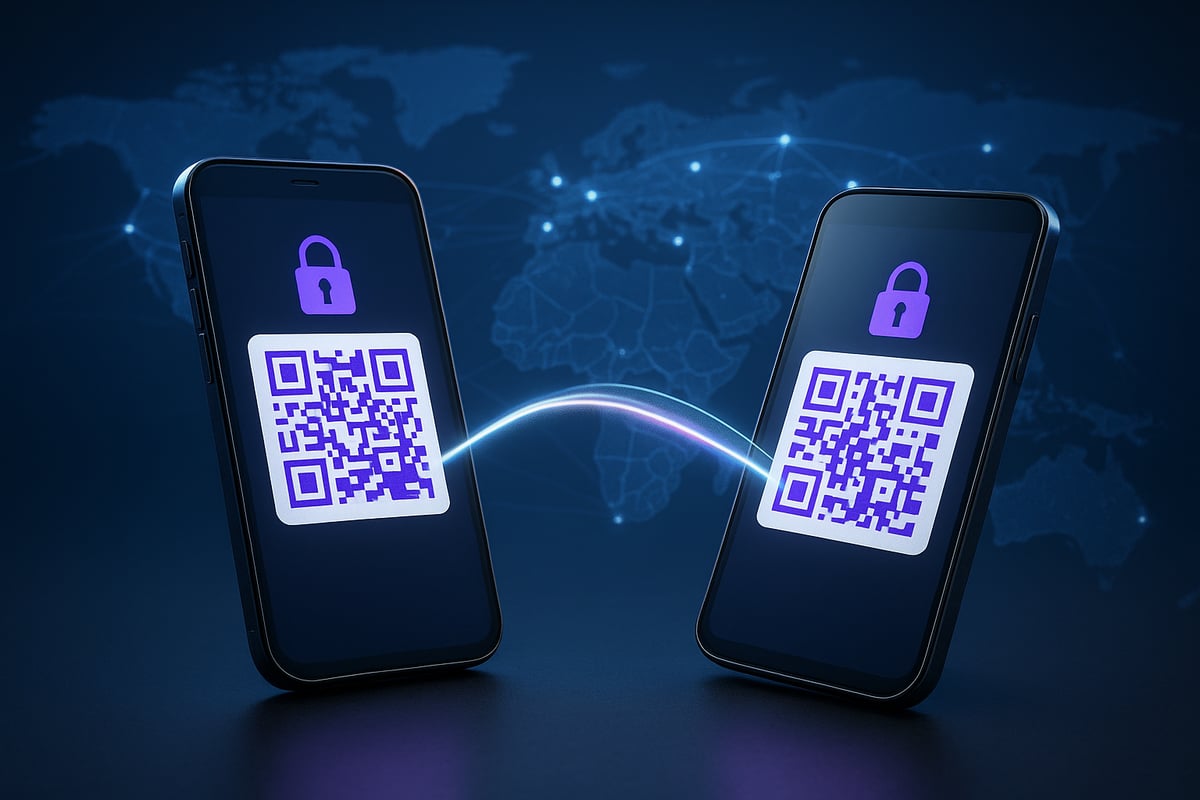
Security is the backbone of any qr cross border payment system. Providers are moving from static QR codes, which remain the same for every transaction, to dynamic QR codes that change with each payment. This reduces the risk of code tampering or reuse.
End-to-end encryption ensures that sensitive payment data remains private during transmission. Tokenization replaces actual card or bank details with unique tokens, minimizing exposure if intercepted. For high value qr cross border transactions, multi factor authentication is becoming standard, often integrating biometric verification such as fingerprints or facial recognition for merchant payouts. These layered security measures support trust and adoption on a global scale.
Combating Fraud and Money Laundering
As qr cross border volumes rise, so do the risks of fraud and money laundering. Advanced AI powered anomaly detection tools now monitor transaction patterns in real time. These systems flag suspicious activities, such as rapid, unusual transfers or attempts to bypass limits.
Providers maintain updated blacklists and whitelists, screening every qr cross border transaction against international sanctions lists. Real time collaboration between payment companies and regulators is essential to keeping bad actors out. With the rise of analytics and machine learning, some networks have reported a 45% drop in qr cross border payment fraud, proving the impact of proactive monitoring.
Cross Border Data Flows and Privacy
Handling sensitive data across borders introduces new privacy challenges. Payment providers must manage data residency, ensuring that customer data is stored and processed according to local laws. Compliance with GDPR in Europe, CCPA in California, and APAC privacy regulations is non negotiable for qr cross border operators.
Transaction data is increasingly encrypted and anonymized to protect user identities. Consent management tools are now embedded in many qr cross border payment apps, allowing users to control how their data is used. Regional initiatives like the ASEAN’s integrated QR payment system demonstrate how standardization can support both security and privacy across multiple jurisdictions.
Preparing for Regulatory Shifts in 2026
Looking ahead, qr cross border payments will face stricter KYC (Know Your Customer) and AML requirements. Digital IDs and e KYC processes are streamlining onboarding, reducing friction for new users while ensuring compliance.
New licensing regimes are expected for global qr cross border payment providers, raising the bar for security and transparency. Businesses that invest early in compliance will gain an edge, as regulators increasingly favor providers with proven track records. Staying proactive on these fronts will be key for anyone seeking long term success in the qr cross border ecosystem.
The Future of QR Cross Border Payments: Trends and Predictions for 2026
Imagine a world where paying across borders feels as simple as a local tap. By 2026, qr cross border payment technology is set to redefine global commerce, unlocking unprecedented speed, reach, and flexibility. Let us explore the trends shaping this future, from mainstream adoption to sustainability and new financial frontiers.
Mainstreaming of QR Cross Border Payments
By 2026, qr cross border payments are projected to surpass $5 trillion in transaction volume. This explosive growth is driven by expansion into new regions, notably Africa, LATAM, and the Middle East. For example, pan-African QR networks are enabling intra-continental trade, allowing small businesses to accept payments from neighboring countries as easily as local ones.
This mainstreaming is not just about numbers. It is about accessibility. Even micro-merchants and freelancers are tapping into global markets without traditional banking barriers. The qr cross border revolution is leveling the playing field, letting anyone participate in the digital economy.
Interoperability and Open Standards
Interoperability is the linchpin of qr cross border scalability. With banks and fintechs adopting ISO 20022 and EMVCo QR standards, payments can flow seamlessly across providers and geographies. In Southeast Asia, the ASEAN QR network now connects over 10 countries, letting travelers and businesses use a single QR code for multi-currency payments.
Open standards break down silos and reduce friction. Partnerships between banks, mobile operators, and payment platforms are essential for this success. As these collaborations deepen, qr cross border payments will become as routine as domestic transactions, regardless of origin or destination.
Integration of Digital Currencies and Stablecoins
Digital currencies are set to amplify the efficiency of qr cross border payments. Central Bank Digital Currencies (CBDCs) and stablecoins offer instant settlement and low-cost conversion, bypassing legacy banking rails. Pilot projects using euro and dollar stablecoins are already demonstrating how qr cross border can benefit from near real-time FX and reduced costs.
Industry leaders like Visa are betting on stablecoins to speed up international transactions, as highlighted in Visa’s stablecoin initiative. As regulation evolves, expect tighter integration between qr cross border payment systems and digital asset infrastructure, making cross border commerce even more frictionless.
Enhanced User Experience and Personalization
The future of qr cross border is not just about backend efficiency. User experience will take center stage. Payment apps will deliver contextual offers, loyalty rewards, and adaptive interfaces for language and accessibility. Imagine receiving instant refunds or splitting payments with friends in different countries, all via a single QR scan.
AI-driven personalization will become standard, anticipating user preferences and suggesting optimal payment methods. As consumers grow accustomed to this convenience, qr cross border solutions that prioritize UX will stand out in a crowded market.
Sustainability and Green Payments
Sustainability is emerging as a key differentiator in qr cross border technology. Reduced reliance on paper receipts, plastic cards, and hardware means less waste. Many providers are turning to energy-efficient blockchain settlement, further shrinking their environmental footprint.
Some qr cross border payment platforms now claim carbon-neutral status, catering to eco-conscious consumers and businesses. As demand for green payment options rises, expect sustainability features to become a core part of future payment offerings.
Beyond Payments: QR as a Gateway to Financial Services
The qr cross border landscape is evolving beyond simple transactions. Embedded finance is unlocking new services, from instant loans to insurance and investment products, all accessible via QR codes. Mass payouts for remote teams and global contractors are becoming more streamlined, as highlighted in mass payouts for businesses.
Digital identity verification and onboarding through QR are also gaining traction, especially for cross border payroll and compliance. As these capabilities mature, qr cross border will serve as a universal gateway, connecting users to a broader suite of financial services worldwide.
As you’ve seen throughout this guide, QR cross border payments are reshaping how we send and receive money around the world—offering speed, security, and seamless integration for businesses and individuals alike. If you’re ready to explore how solutions like Payoro can help you simplify global transactions, expand your reach, and stay ahead of regulatory changes, you don’t have to figure it out alone. Let’s take the next step together—if you have questions or want tailored recommendations for your business, Contact sales and start your journey toward effortless global payments.
Share article on


Related articles
See all articles Instant Payouts: Why Speed Matters for Platform Retention
Platforms offering instant payouts see 20-35% higher seller retention. Learn how instant payout rails work and how to...

What Is a Payout API and How Does It Work?
A payout API lets your platform send money to recipients automatically. Learn how the flow works, who needs...
What Are Payment Rails? A Guide to Faster, Smarter Payouts
Payment rails determine how fast and cheap your payouts arrive. Learn about SEPA, SWIFT, card networks, and blockchain...
How to Reduce Cross-Border Payout Costs for Your Business
Cross-border payouts drain margins through hidden fees, FX markups, and slow settlement. Learn practical strategies to cut costs...